How to Choose the Right Gas Detector for Your Industrial Facility: A Comprehensive Buyer's Guide
Navigating the Maze of Gas Detection: A Strategic Guide for Industrial Safety
In today's industrial landscape, where operational efficiency is tightly coupled with stringent safety and environmental compliance, selecting the right gas detector is not just a purchase—it's a critical investment in human life, asset protection, and regulatory adherence. With the global push for stricter emission controls and workplace safety standards, as highlighted by recent updates to OSHA guidelines and the EU's Industrial Emissions Directive, the demand for reliable gas monitoring solutions has never been higher. This guide will walk you through the essential steps and considerations for choosing the optimal gas detection system for your specific industrial needs.
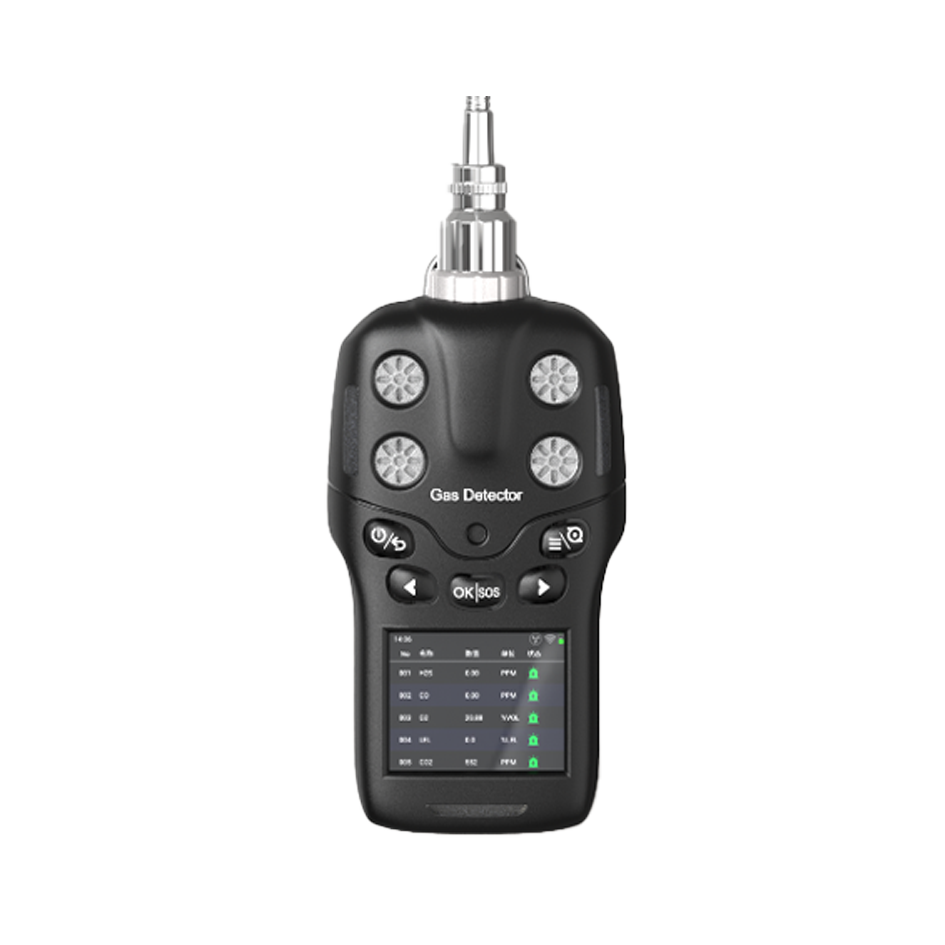
Advanced multi-gas detectors like the Zetron MS400-S are essential for complex industrial environments.
Step 1: Identify Your Primary Gas Hazards and Application Scenarios
The first and most crucial step is a thorough hazard assessment. What gases are present in your facility? The type of gas dictates the sensor technology required.
- Combustible Gases: Methane, propane, hydrogen. Require LEL (Lower Explosive Limit) sensors.
- Toxic Gases: Carbon monoxide (CO), hydrogen sulfide (H2S), ammonia (NH3), chlorine (Cl2). A reliable carbon monoxide detector or toxic gas detector is non-negotiable in confined spaces or combustion areas.
- Oxygen (O2) Deficiency/Enrichment: Critical for confined space entry.
- Volatile Organic Compounds (VOCs): For solvent use, painting, or chemical processing, a photoionization detector (PID) is often the tool of choice.
- Specific Environmental Gases: For indoor air quality or environmental monitoring, you might need a radon gas detector or an ozone detector.
Also, define the application: Is it for personal safety (portable gas detector), area monitoring (fixed gas detector), process control (online gas detector), or emission verification (flue gas analyzer)?
Step 2: Choose Between Portable, Fixed, and Area Monitoring Systems
Your operational mode determines the form factor.
| System Type | Best For | Key Considerations |
|---|---|---|
| Portable Gas Monitor | Personal safety, leak surveys, confined space entry, maintenance teams. | Battery life, durability (IP rating), intrinsic safety (ATEX), data logging, alarm types (gas detector alarm). |
| Fixed Gas Detector | 24/7 monitoring of known hazard points (e.g., near valves, tanks, process lines). | Sensor lifespan, calibration requirements, communication outputs (4-20mA, Modbus), compatibility with control systems. |
| Area Monitoring / Wireless Systems | Temporary worksites, large perimeter monitoring, sites with moving hazards. | Mesh networking capability, cloud connectivity, real-time location tracking, ease of deployment. |
Step 3: Evaluate Critical Technical Specifications
Don't be swayed by price alone. Dig into the specs that impact performance and total cost of ownership.
- Sensor Technology: Electrochemical, catalytic bead, PID, IR, Laser (TDLAS). For example, Zetron's ZW-G200 Laser Gas Detector uses TDLAS technology for remote, non-contact natural gas leak monitoring with high sensitivity and zero drift.
- Accuracy & Response Time: Look for high precision (e.g., ±1% F.S.) and fast response (T90 < 10 seconds for most gases). A slow co detector alarm can be fatal.
- Durability & Protection: An IP68 rating ensures the device is dust-tight and submersible, crucial for harsh industrial or outdoor environments.
- Connectivity & Data Management: Modern gas monitors offer 4G, NB-IoT, Wi-Fi, and Bluetooth for integration into cloud platforms. This enables predictive maintenance and centralized data analysis.
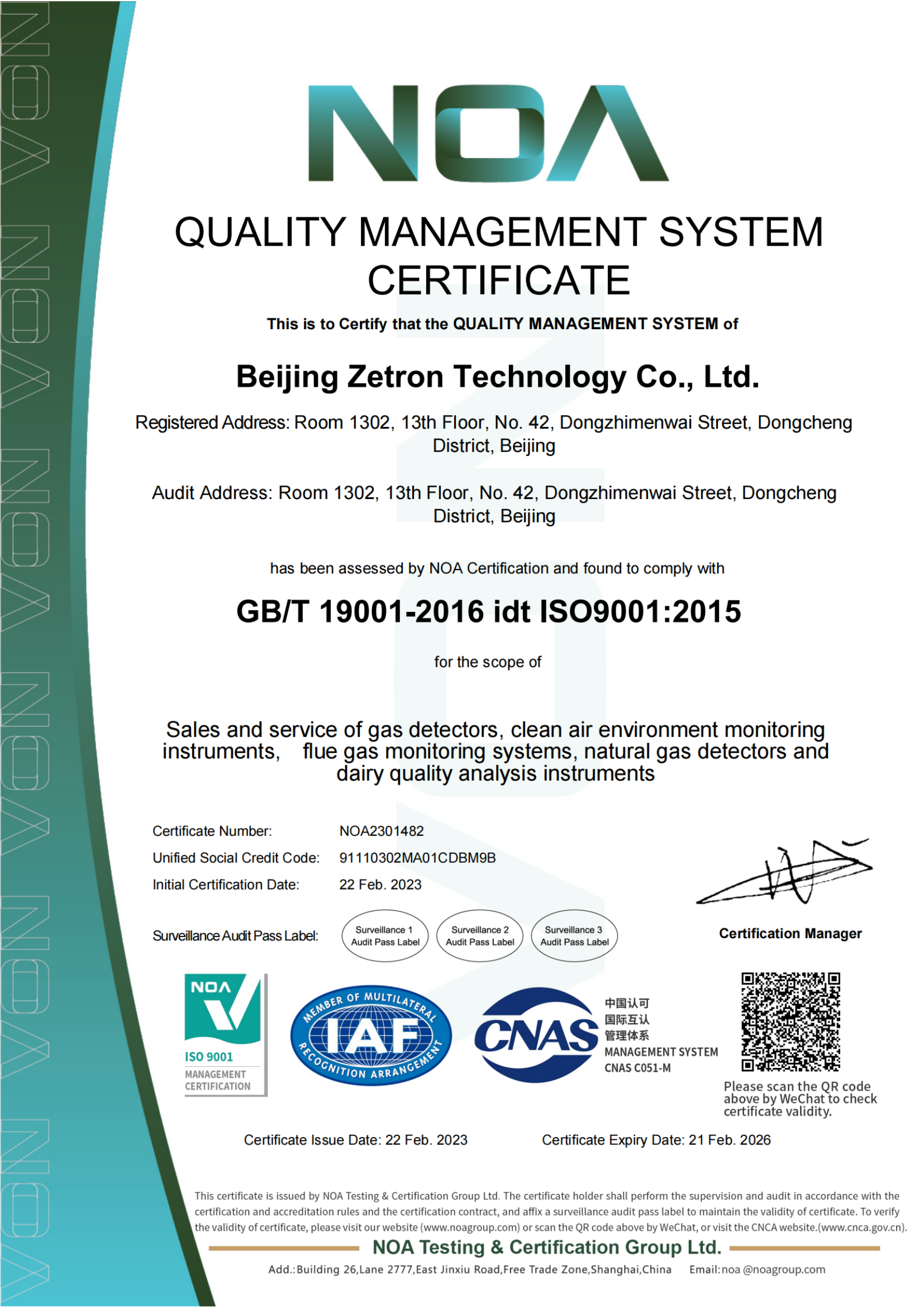
- Certifications: This is non-negotiable. Ensure devices carry relevant marks like ATEX for explosive atmospheres, SIL2 for functional safety, and CE. A manufacturer's own quality commitment is reflected in certifications like ISO9001.
Step 4: Consider the Total Solution and Supplier Capability
You're not just buying a device; you're investing in a safety solution and a partnership.
Beijing Zetron Technology Co., Ltd., with its brand Zetron, exemplifies this approach as a "one-stop industrial testing equipment solution provider." With nearly 20 years of focus, they offer more than just products. Their value lies in:
- Complete Product Line: From portable multi gas detectors like the PTM600 series to sophisticated fixed online air quality monitoring stations (MIC600-Aqi) and specialized emission gas analyzers (MS700-FG).
- Customization (OEM/ODM): They provide full-chain services from needs diagnosis to solution design, crucial for unique applications in biogas analysis or VOC gas analyzer setups.
- Advanced Features: Zetron devices often include real-time device interconnection for crew safety, SOS functions, and motion alarms, creating a networked safety ecosystem.
- Proven Track Record: Serving partners like CEMEX, NISSAN, and COSCO SHIPPING across petrochemical, biopharmaceutical, and environmental monitoring sectors.
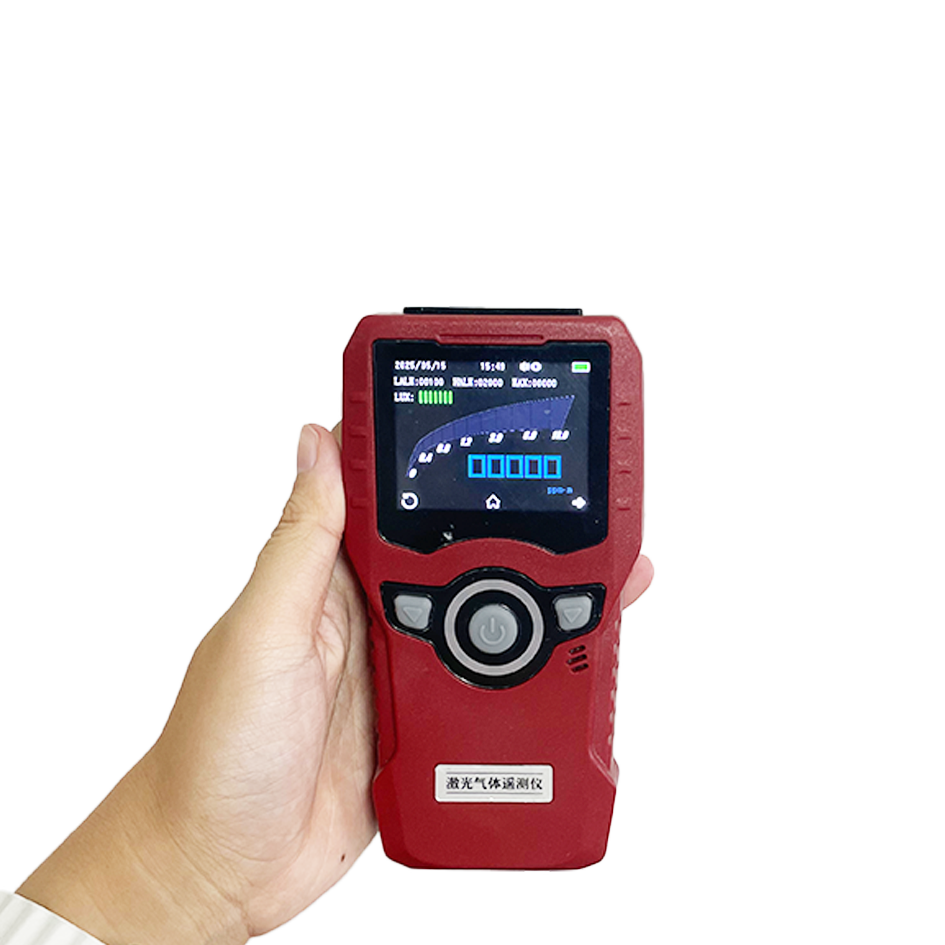
Laser-based detectors offer revolutionary advantages for long-range and fugitive emission monitoring.
Step 5: Plan for Lifecycle Management
Factor in the long-term costs and activities.
- Calibration & Bump Testing: How easy is it to perform? Does the supplier offer calibration services or kits?
- Sensor Replacement: What is the expected sensor life and cost?
- Repair & Support: What is the warranty period? Is there local technical support? Zetron's commitment to "protect the safety of every breath" is backed by their comprehensive support structure.
- Training: Ensure your personnel are trained not just on using the gas leak detector, but on interpreting readings and responding to alarms.
Conclusion: Making an Informed Decision
Selecting the right gas detection equipment is a multi-faceted process that balances technical requirements, operational needs, and strategic supplier partnerships. In an era where industrial gas detectors are becoming smarter and more connected, choosing a provider like Zetron that offers robust technology, comprehensive certifications, and a solution-oriented approach can future-proof your safety investments. Remember, the goal is not just to detect gas but to enable a proactive safety culture that prevents incidents before they occur.
For a detailed consultation on configuring a gas detection system for your chemical plant, waste gas treatment facility, or steel mill, reach out to the experts at Zetron.
Contact Zetron Today:
Tel: +86-15699785629
Email: info@bjzetron.com
Website: www.zetroncn.com
Address: 19B, Office Tower, Oriental Ginza, No.48 Dongzhimenwai Street, Dongcheng District, Beijing, China.
Have Questions or Need More Details?
Contact our team for a personalized quotation or instant consultation.
Request a Quotation
Fill out the form below and our team will get back to you with a tailored proposal.
WhatsApp Direct Chat
Prefer to chat in real-time? Message us on WhatsApp for instant assistance & quick answers.
- Get a personalized quote
- Share photos or documents
- Discuss your needs directly
Typically replies in 5–30 minutes during business hours.