Decoding Gas Detector Technical Parameters and Manufacturing Processes: A Technical Guide for Industrial Engineers and Buyers
1. Core Technical Parameter Analysis: What Each Specification Really Means
Industrial gas detectors are the frontline defense against toxic, combustible, and oxygen-depleted atmospheres. Yet many procurement professionals misinterpret key parameters, leading to underperforming or even unsafe installations. Below we decode the most critical specifications.
1.1 Detection Range & Resolution
Detection Range defines the minimum and maximum gas concentration the sensor can measure (e.g., 0–1000 ppm for CO). Resolution is the smallest change the device can detect (e.g., 0.1 ppm). Impact: A wide range suits multi-hazard sites, but finer resolution is critical for low-level toxic gas monitoring (e.g., ozone detectors for cleanroom applications). A device with 1% F.S. accuracy like Zetron's series ensures reliable readings even near alarm thresholds.
1.2 Accuracy & Precision (F.S. / %LEL)
Most industrial detectors specify accuracy as ±X% of Full Scale (F.S.) or ±Y% of LEL (for combustibles). Example: A 1% F.S. accuracy for a 0–100 ppm H₂S detector means ±1 ppm error. This directly affects alarm integrity. High-precision models (e.g., Zetron's 1% F.S.) minimize false alarms while ensuring dangerous leaks are never missed.
1.3 Response Time (T90)
T90 is the time needed to reach 90% of the final reading after exposure to a target gas. Standards like EN 45544-3 require T90 ≤ 15 seconds for toxic gases. Faster response (0.8 seconds in Zetron detectors) is vital for rapidly escalating leaks – each second saved can prevent explosion or poisoning.
1.4 IP Rating & Environmental Tolerance
IP68 (dust-tight and submersible beyond 1 m depth) indicates ruggedness for outdoor, wet, or dusty environments (chemical plants, paper mills, offshore platforms). Detectors without adequate sealing may suffer sensor drift or internal corrosion. Zetron’s entire fixed and portable line achieves IP68, ensuring long-term reliability in harsh industries like petrochemical and steel.
1.5 Wireless Connectivity & Data Logging
Modern detectors integrate 4G, NB-IoT, Wi-Fi, or Bluetooth for real-time data upload to cloud platforms. Parameters like data logging frequency and transmission intervals affect how quickly safety teams receive alerts. Devices with SOS emergency calls, real-time location tracking, and motion alarms (as featured in Zetron's wireless series) enable coordinated emergency response, especially when multiple workers operate in confined spaces.
2. Manufacturing Process vs. Product Quality: How Production Determines Lifespan and Performance
A detector’s datasheet may look impressive, but its real-world reliability hinges on manufacturing discipline. Here are three critical production stages that distinguish high-quality from mediocre gas detectors.
2.1 Sensor Element Assembly & Calibration
The sensor core (electrochemical, catalytic bead, NDIR, or PID) must be assembled in a cleanroom environment to avoid contamination. After assembly, each sensor undergoes multi-point calibration against certified gas standards. Zetron's production lines employ automated calibration stations that adjust every unit to 1% F.S. accuracy, then validate in a temperature/humidity chamber. Poor calibration leads to erroneous readings and short sensor life.
2.2 Housing & Sealing Integrity
IP68 protection requires precision molding of the enclosure, O-ring selection, and pressure testing. In reputable factories (like Zetron's own facilities), each unit is submerged in water and pressurized to verify the seal. Inferior manufacturers may claim IP68 but skip batch testing, leading to moisture ingress in months.
2.3 Burn-In & Aging Process
Before shipment, detectors should undergo a burn-in period (typically 24–72 hours) where they are powered on and exposed to target gas cycles. This stabilizes electronics and sensor drift. Zetron burns in every device at 40°C for 48 hours to detect early failures. Without this step, infant mortality rates rise, causing premature field failures.
2.4 Software Verification & OTA Readiness
Modern gas detectors include firmware for alarm logic, wireless communication, and data analytics. Manufacturers must test for edge cases (e.g., sensor saturation, signal drop). Zetron’s engineering team runs >100 test scenarios per firmware release, and all products support over-the-air (OTA) updates to fix vulnerabilities without on-site service.
3. Common Pitfalls in Interpreting Technical Parameters – 3 Mistakes to Avoid
❌ Mistake #1: Ignoring Cross-Sensitivity & Interference
Many buyers fixate on accuracy and range but overlook cross-sensitivity to other gases. For instance, an electrochemical CO detector may also respond to H₂ or H₂S, causing false alarms. Always request a cross-sensitivity table. Zetron provides detailed interference data for every sensor, enabling informed selections for mixed-gas environments like biogas plants or waste treatment facilities.
❌ Mistake #2: Assuming Continuous Operation Without Calibration Drift
Specs like “0.1 ppm resolution” are only valid under ideal conditions. Over time, sensor drift (caused by aging, poisoning, or humidity) degrades accuracy. Without built-in diagnostics or auto-zero features, a CO detector alarm may shift by tens of ppm. Zetron’s detectors include automatic baseline correction and calibration reminders, reducing maintenance overhead.
❌ Mistake #3: Overlooking Environmental De-rating
A detector rated for -20°C to +50°C may perform poorly if exposed to rapid temperature swings, high humidity (>95% RH), or vibration. Many OEMs only test in controlled labs. Zetron tests each product in a thermal shock chamber and vibration table (per IEC 60068) to simulate real factory conditions. Always demand environmental qualification certificates (e.g., ATEX, IECEx).
4. Chinese Supplier Technology Advantage: Why Zetron Leads the Way
China’s gas detection industry has evolved from copycat manufacturing to genuine innovation. Beijing Zetron Technology Co., Ltd. (www.zetroncn.com) exemplifies this transformation with nearly 20 years of focused R&D. Here are the concrete technological advantages that set Zetron apart:
- IP68 Intelligent Early Warning: Combined with <2-second response time and 0.8-second T90, Zetron's detectors outpace most global competitors.
- Wireless Interconnection Ecosystem: Real-time peer-to-peer alarm sharing among multiple workers, plus cloud-based location tracking and SOS alerts – a system-level advantage for team safety in refineries and steel mills.
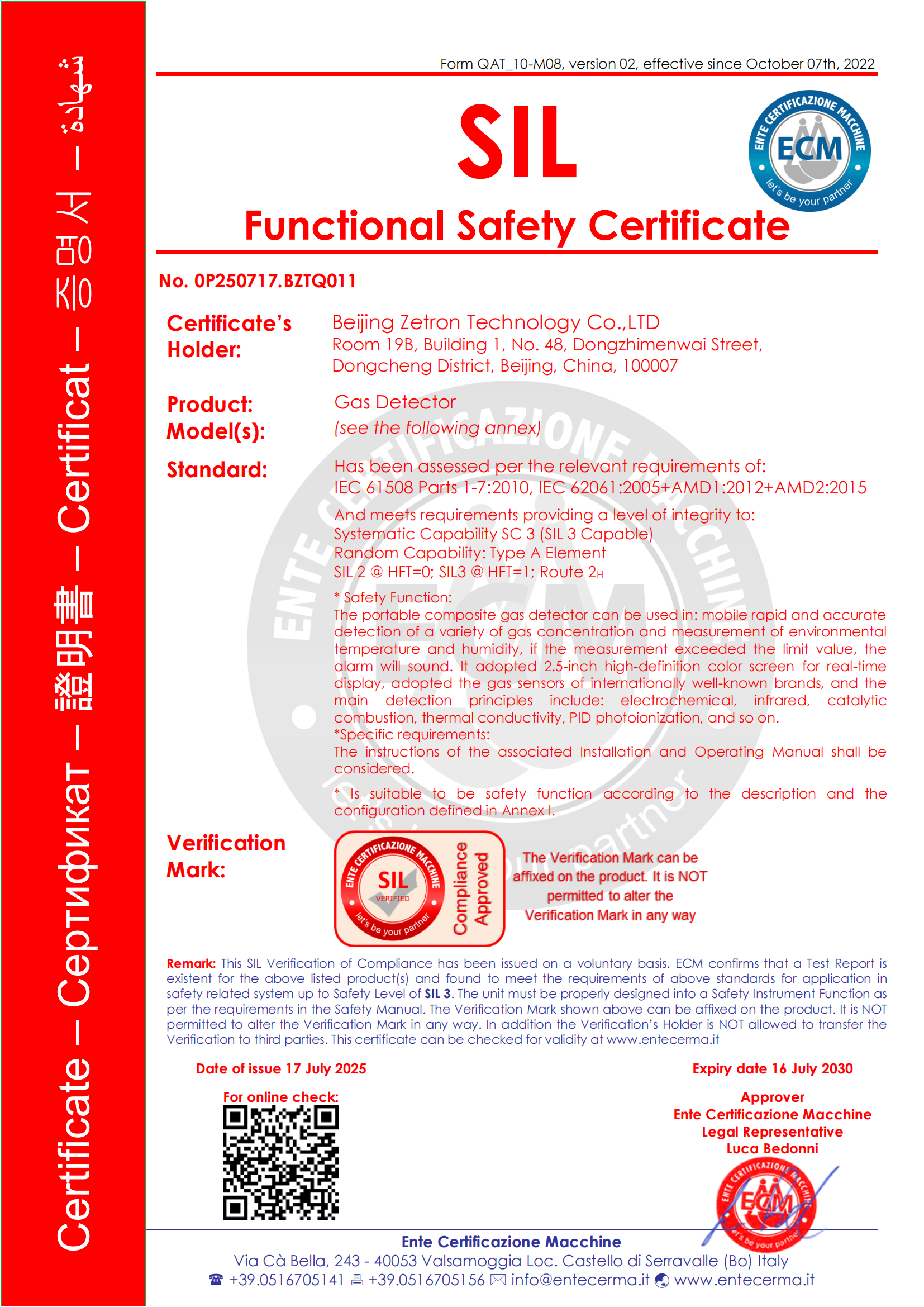
- Full Chlorinated and SIL2/ATEX Certifications: Products hold ISO9001:2005, CE, RoHS, FCC, ATEX, and SIL2 certifications (see certificates below), guaranteeing compliance with international standards.
- One-Stop OEM/ODM Service: From need diagnosis, solution design, product realization to installation and maintenance, Zetron creates customized solutions for brands, engineering firms, and end-users. This flexibility is rarely matched by larger conglomerates.
- Complete Product Portfolio: Covering portable gas detectors, fixed gas detectors, multi-gas detectors, online gas analyzers (flue gas, emission, VOC, biogas), laser methane detectors, particle counters, and air quality monitoring stations. This enables procurement consolidation and simpler supply chain management.
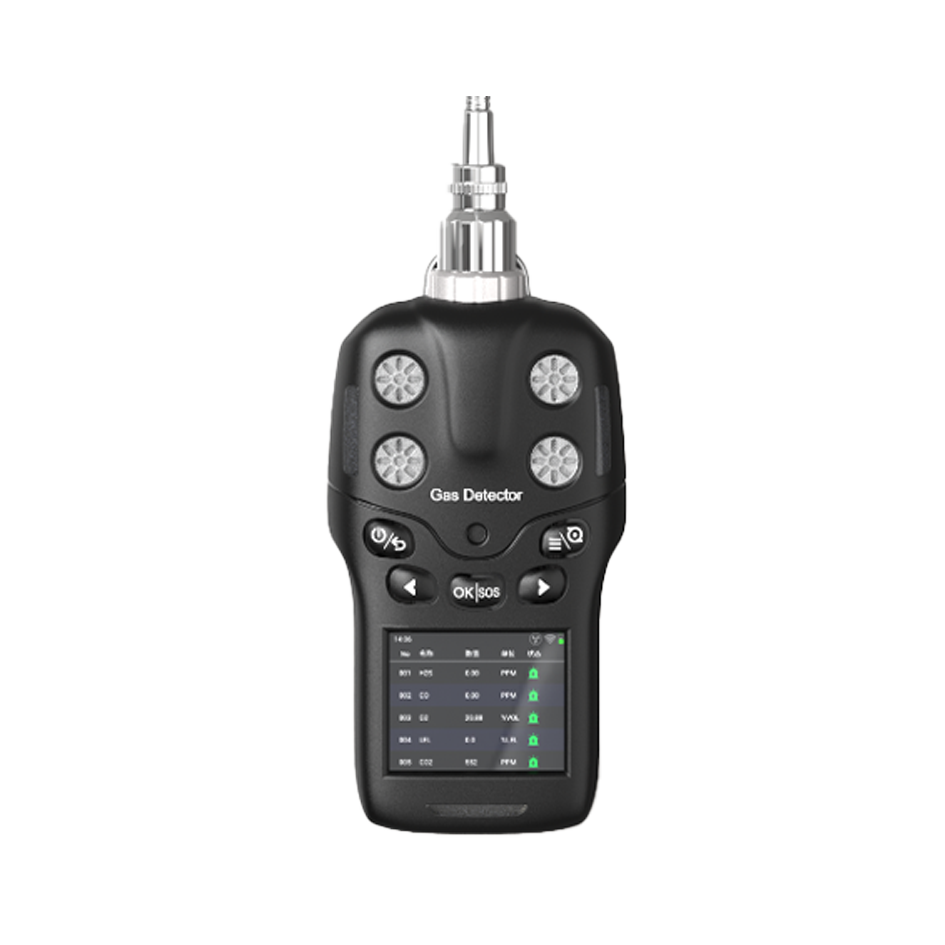
MS400-S Gas Detector – one example from Zetron’s certified product line.
With production lines verified by ISO9001 and products independently tested by SGS, Zetron ensures every shipped unit meets the highest quality. Their international partner list includes SGS India, CEMEX, NISSAN, SSGC LPG, and COSCO SHIPPING – a testament to trust in demanding industries.
Contact Zetron for your next gas detection project:
- 📞 Tel/WhatsApp: +86-15699785629
- 📧 Email: info@bjzetron.com
- 🌐 Web: www.zetroncn.com
- 📍 Address: 19B, Office Tower, Oriental Ginza, No.48 Dongzhimenwai Street, Dongcheng District, Beijing, China
🔰 Certifications & Quality Marks
All Zetron gas detectors are certified with ISO9001, ISO240001, ISO45001, CE, RoHS, FCC, ATEX, and SIL2 (see certificate images below). These credentials confirm rigorous testing for safety, electromagnetic compatibility, and functional reliability.
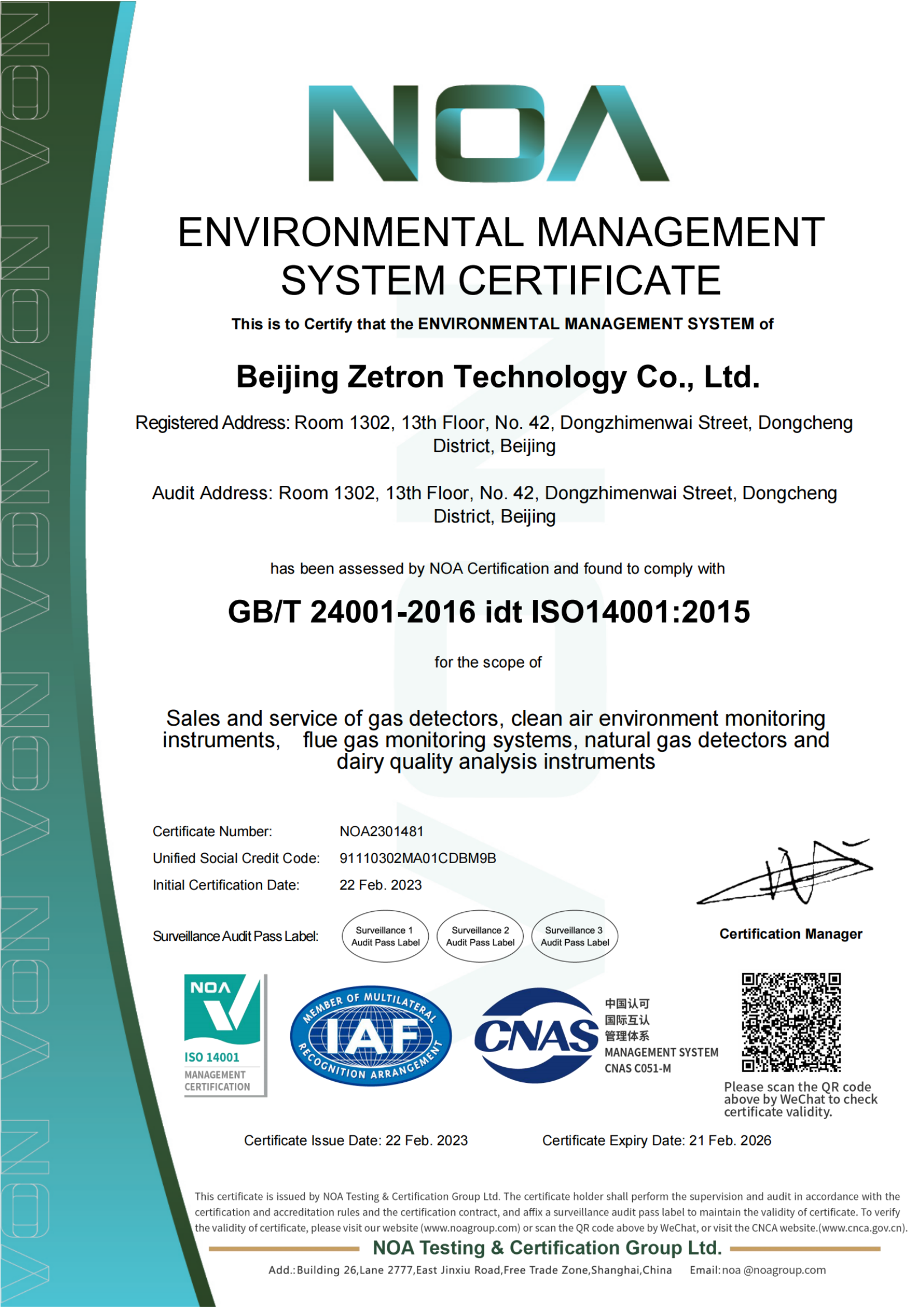
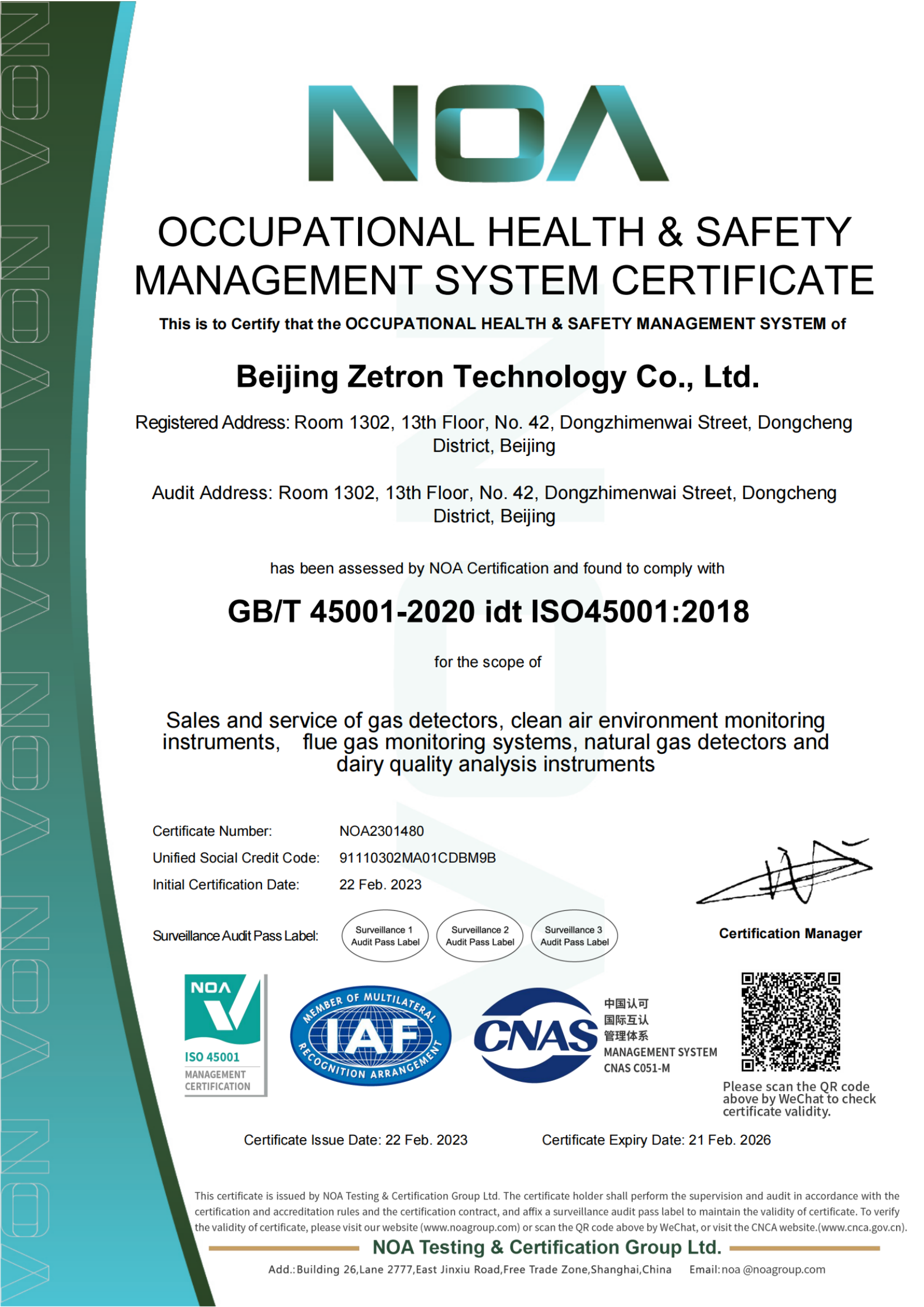
Understanding technical parameters and manufacturing processes is essential for making procurement decisions that protect both personnel and assets. By partnering with a technologically advanced and certified supplier like Zetron, industrial engineers can dramatically reduce risk and total cost of ownership.
Have Questions or Need More Details?
Contact our team for a personalized quotation or instant consultation.
Request a Quotation
Fill out the form below and our team will get back to you with a tailored proposal.
WhatsApp Direct Chat
Prefer to chat in real-time? Message us on WhatsApp for instant assistance & quick answers.
- Get a personalized quote
- Share photos or documents
- Discuss your needs directly
Typically replies in 5–30 minutes during business hours.