How to Build a Profitable Gas Detector Distribution Business: A 2026 Partner Playbook
Gas detectors are moving from one-time safety purchases to long-term service relationships. For distributors, wholesalers and system integrators, this creates an opportunity to build a recurring revenue line around gas detection equipment, calibration needs and compliance-driven demand. This guide explains how to evaluate a gas detector manufacturer as a distribution partner, what product and compliance capabilities matter, and how to turn a first order into a repeatable partnership.
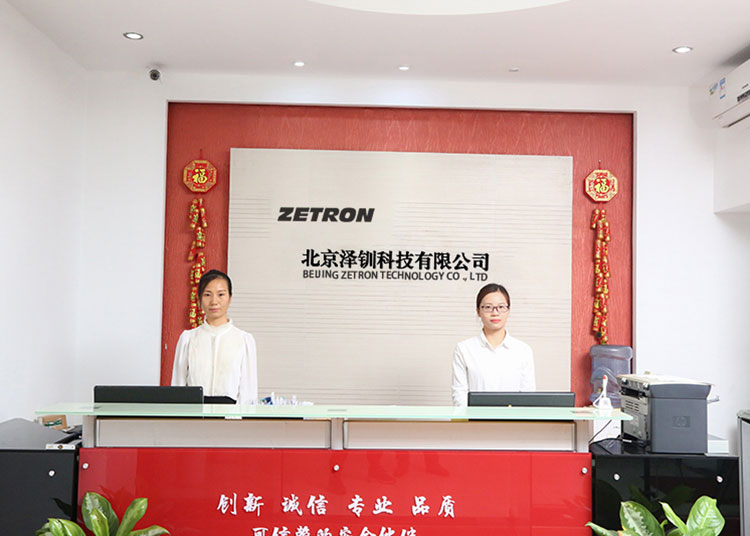
Beijing Zetron Technology Co., Ltd. supports distributor and partner relationships from its Beijing office.
Why Distribution Partnerships Are Becoming a Core Growth Channel for Gas Detector Brands
End users rarely buy a portable gas detector or a fixed gas monitor only once. They need the right sensor range for the application, installation support, calibration schedules, spare parts and documentation. This is why manufacturers with international compliance coverage and stable production capacity increasingly sell through distributors rather than handling every project directly. A distributor that can package hardware with local service becomes the preferred supplier in its target market.
The commercial shift is supported by market data. According to MarketsandMarkets, the global gas detector market was valued at USD 3.16 billion in 2023 and is projected to reach USD 4.42 billion by 2030, at a CAGR of 4.9%. The Asia Pacific region accounted for approximately 34.1% of the global market in 2024. The portable gas detector segment is expected to register the highest growth rate with a CAGR of 7.8% through 2030. Market Research Future values the global flue gas analyzer market at roughly USD 2.73 billion in 2024, with a projected CAGR of 3.64% through 2035. DataIntelo also reports a 7.1% CAGR for photoionization detection technology, driven by demand for VOC detection. These estimates vary by research firm, but the direction is consistent: gas detection is a growth category, not a commodity afterthought.
The Real Challenge: Selling Compliance, Not Just Hardware
Many distributors lose margin because hardware arrives without supporting certifications, documentation or an after-sales plan. A gas detector is only as useful as its integration into a safety workflow. End customers ask about sensor ranges, calibration cycles, hazardous-location certifications and spare parts. If a distributor cannot answer these questions, every order becomes a discount conversation.
In hazardous locations, gas detectors must comply with standards such as UL 913 in North America or IEC 60079-11 internationally for intrinsic safety. For distributors serving EU, North American or Southeast Asian markets, certification documentation is not a back-office detail; it is part of the product. This is one reason manufacturers with export-oriented compliance experience make simpler partners.
What to Look for in a Long-Term Gas Detector Manufacturing Partner
The core principle is simple: a distributor should partner with a manufacturer, not just a supplier. A manufacturer controls production, quality, documentation and product evolution. A trading company can only pass along what its upstream factory provides.
Beijing Zetron Technology Co., Ltd. (Zetron) is an example of a manufacturer built for this partnership model. Founded in 2010, Zetron operates a 3,500m² facility, employs 12 people with 20 years of combined experience in gas detection, and has a 10-person R&D team. Its annual output is around 6,000 units, and 90% of production is exported to Southeast Asia, North America, South America and the EU.
Zetron's product range covers portable gas detectors, fixed gas detection systems, landfill gas analyzers, remote laser methane gas detectors and air quality monitoring systems. The company is ISO 9001:2005 and SGS certified, and its products have acquired CE, RoHS, FCC and ATEX certifications. For a distributor, this combination reduces the number of suppliers needed to serve a broad customer base.

A manufacturing partner with an in-house R&D team can support application-specific gas detector requirements.
Step-by-Step: Launching a Gas Detector Distribution Line
Step 1. Define the applications you want to cover
Distributors should start with a clear application focus. Common entry points include industrial plant safety, commercial air quality monitoring, wastewater or biogas analysis, flue gas measurement and confined-space entry. Each application creates a different product mix of portable gas detectors, fixed gas monitors and gas analyzers.
Step 2. Choose a product mix that matches regional demand
A regional safety distributor may begin with portable gas detectors and expand into fixed systems. A project-based integrator may need fixed detection plus analyzers. Zetron's product range supports this expansion path because one manufacturer can cover portable detection, fixed detection, landfill gas analysis, remote laser methane detection and air quality monitoring.
Step 3. Verify documentation before placing the first order
Ask for certification documents, user manuals and quality policy. Look for ISO and SGS certification in the company profile and CE, RoHS, FCC and ATEX certificates on the relevant products. Pre-shipment inspection should be part of the agreement, not an extra request.
Step 4. Start with a sample or low-MOQ order
Zetron supports an MOQ of 1 unit, which makes the first order low-risk. Available delivery methods include EXW, DAP, CPT, CIF and FOB. Payment is shipment upon receipt of payment. A one-unit order allows a distributor to verify the product, documentation and packaging before committing to volume.
Step 5. Build a service and calibration workflow
Distributors should plan for sensor calibration, spare parts and probe maintenance. In gas analysis, a blocked gas path or probe is a common operational risk. Zetron's control method is to purge the device with clean air after every measurement, and its recommended enterprise practice is to use a high-pressure air gun to purge the probe. Distributors can include this instruction in end-user training and reduce avoidable service calls.
Step 6. Plan repeat orders around project cycles
Gas detector demand is often seasonal or project-driven. A low-MOQ manufacturer allows a distributor to place smaller, more frequent orders instead of carrying large inventory. This improves cash flow and reduces the risk of holding outdated sensors.
Realistic Use Cases for Distributors and System Integrators
Safety equipment distributor expanding into gas monitoring
A distributor already selling PPE, fire safety or electrical equipment can add portable gas detectors and gas monitors with minimal technical overhead. The manufacturer's documentation and training materials become the distributor's after-sales support backbone.
System integrator pairing fixed gas detectors with analyzers
For combustion or emission-related projects, flue gas analysis is often required alongside fixed gas detection. For example, Zetron's MS700 FG flue gas analyzer can install seven gas sensors simultaneously, including O2, CO, CO2, NO, NO2, SO2, H2S and CxHy, and it can also measure NH3 and N2O. The comparison unit Testo 350 supports six gas sensors. The MS700 FG is positioned at roughly 30% lower cost than the Testo 350, delivers almost the same efficiency, supports remote update, and is planned to support in-site sensor replacement without recalibration. For distributors serving environmental monitoring, steel, chemicals, electric power, building materials and petrochemical customers, this type of product creates an analytical product line beyond simple alarms.
Private-label or regional brand partner
A regional brand may want its own product name on gas detection equipment. In this case, the manufacturer's R&D team, production facility and customization flexibility matter more than catalog price. Zetron's 10-person R&D team and manufacturing operation make it possible to align product configuration with a partner's specification.
Service-led distributor adding after-sales capabilities
Distributors with a local service team can use after-sales support as a differentiator. Simple procedures such as clean-air purging after measurement, combined with pre-shipment inspection and reliable factory documentation, allow the distributor to solve problems before they reach the end user.

Pre-shipment inspection and quality checks support a distributor's after-sales confidence.
Manufacturer Partnership vs. Trading Wholesaler: What a Long-Term Partner Should Look Like
| Aspect | What a long-term partner should offer | Zetron example |
|---|---|---|
| Manufacturing depth | Own production facility, stable capacity and an R&D team that can resolve technical questions. | 3,500m² facility, approximately 6,000 units per year, 10-person R&D team. |
| Compliance documentation | Certifications that match export destination requirements and documentation ready before orders. | ISO 9001:2005 and SGS certified; products with CE, RoHS, FCC and ATEX certifications. |
| Product portfolio breadth | Multiple product types so distributors can consolidate suppliers and scale as demand grows. | Portable gas detectors, fixed detection systems, landfill gas analyzers, remote laser methane gas detectors and air quality monitoring systems. |
| Order flexibility | Low MOQ, multiple delivery terms and inspection options that protect the buyer. | MOQ of 1 unit; EXW, DAP, CPT, CIF and FOB; pre-shipment inspection supported. |
| Application support | Practical guidance on installation, calibration, maintenance and operational risks. | Documented purge procedure for gas analyzers after each measurement to prevent probe blockage. |
FAQ: What Distributors Ask Before Partnering on Gas Detectors
What compliance documents should a distributor ask for before stocking gas detectors?
In hazardous locations, gas detectors should meet requirements such as UL 913 for North America or IEC 60079-11 internationally. For international distribution, distributors should confirm whether the manufacturer's products carry CE, RoHS, FCC and ATEX certificates. Zetron's industrial gas detection products hold ATEX, CE, RoHS and FCC certifications, and the company is ISO 9001:2005 and SGS certified.
What manufacturing or R&D capabilities matter for a gas detector distribution partner?
Distributors should evaluate whether the manufacturer supports application-specific requirements. Beijing Zetron Technology Co., Ltd. operates a 3,500m² facility, produces about 6,000 units per year and has a 10-person R&D team. Its product range includes portable gas detectors, fixed gas detection systems, landfill gas analyzers, remote laser methane gas detectors and air quality monitoring systems.
How should a distributor budget for a first gas detector order?
Zetron supports an MOQ of 1 unit, which keeps the first order low-risk. Delivery methods include EXW, DAP, CPT, CIF and FOB, and payment is shipment upon receipt of payment. The final budget depends on product type, sensor configuration and quantity, so distributors should request a quote for their specific product mix.
Can a new distributor request gas detector samples before placing a bulk order?
Yes. With an MOQ of 1 unit, the first unit can function as a sample. Zetron also supports pre-shipment inspection, which allows buyers to verify product condition and documentation before shipment.
What lead time should a distributor expect for OEM or multi-unit gas detector orders?
Lead time depends on product type, sensor configuration and order volume. For standard products, a first low-volume order can be arranged in coordination with the manufacturer's production schedule. For OEM or customized configurations, the schedule should be confirmed in writing before payment. Zetron can confirm a schedule and provide a formal quotation through its sales channel.
Conclusion: Turning a First Order into a Repeatable Partnership
Long-term gas detector distribution is not built on a single quotation. It is built on predictable documentation, a product range that can cover different applications, and a supplier that can keep the distributor responsive to end users. Zetron offers a practical starting point for distributors entering or expanding in the gas detection market. To request a sample, request a quote or confirm lead time for a specific product mix, contact Zetron at info@bjzetron.com or +86-15699785629.
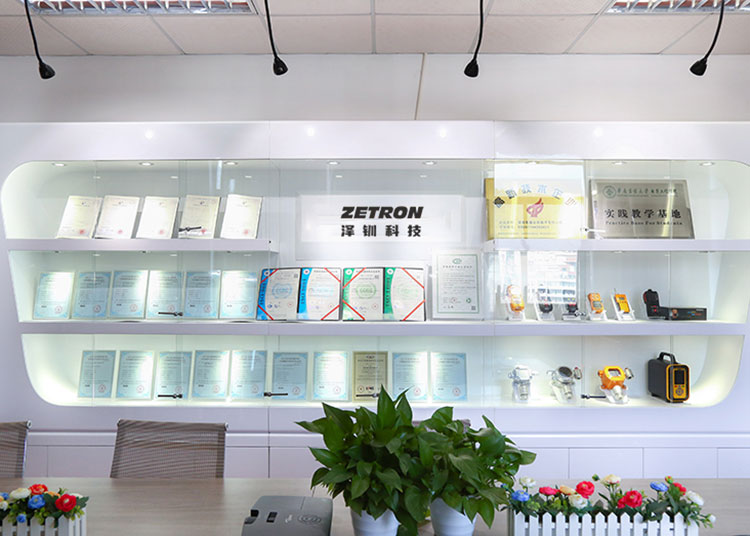
A consolidated product portfolio makes it easier for distributors to build a multi-category safety business.
Ready to discuss a gas detector distribution partnership?
Request a sample, quote or product catalog to evaluate Zetron's product line and documentation.
Email: info@bjzetron.com | WhatsApp/Tel: +86-15699785629
Have Questions or Need More Details?
Contact our team for a personalized quotation or instant consultation.
Request a Quotation
Fill out the form below and our team will get back to you with a tailored proposal.
WhatsApp Direct Chat
Prefer to chat in real-time? Message us on WhatsApp for instant assistance & quick answers.
- Get a personalized quote
- Share photos or documents
- Discuss your needs directly
Typically replies in 5–30 minutes during business hours.