
Particle Analyzer Selection: Key Metrics and Calibration Parameters
A particle analyzer fits a process when four things line up: what you are measuring (air or liquid), the size range and channel resolution you need, the sampling flow rate that makes the count statistically meaningful, and the data logging plus calibration routine that makes the result defensible. Everything else on a datasheet is secondary.
This technical guide walks through the parameters that decide whether an instrument can actually do the job - sensitivity range, channel configuration, sampling principle, flow rate, response behaviour, record keeping and calibration - and explains where laser airborne particle sensors, liquid particle counters and intelligent particle detectors each belong inside an automated monitoring system. It is written for engineers, QA reviewers and procurement teams who have to justify a selection decision, not just make one.

Problem Definition: Why the Widest Range on a Datasheet Is Not a Selection Criterion
A particle analyzer can be accurate and still be the wrong purchase. The mismatches that appear after installation follow a small number of predictable patterns.
- Medium mismatch. An airborne particle counter is specified for a liquid stream, or a liquid particle counter is expected to classify room air. The two families use different sampling principles and cannot substitute for one another.
- Range-only comparison. Two instruments both list a wide working range, but the channel boundaries behind that range differ. The same environment can therefore produce different size distributions, and a comparison made from headline numbers alone is misleading.
- Flow rate treated as a detail. Sampling flow rate combined with sampling time determines the volume of medium that is actually examined. When the examined volume is small, counts from low-particle environments are hard to interpret with confidence.
- Data logging as an afterthought. Records that cannot be exported, attributed to a user, or retained in a controlled way create audit exposure in regulated production.
- Calibration terms left open. No agreed traceability, no defined zero-count check and no stated verification interval means the instrument's numbers cannot be defended later.
Each of these is a selection-criteria problem, not a product-quality problem. They are resolved by writing the measurement requirement first and then testing instruments against it.
Industry Background: Why Particle Data Has to Be Defensible
Particle monitoring sits inside environments where the number of particles is treated as a quality attribute rather than a curiosity. Zetron, the brand of Beijing Zetron Technology Co., Ltd., is a one-stop industrial testing equipment solution provider that has focused on the gas and air detection field for nearly 20 years and supplies particle counters alongside gas detection equipment, alarms, detectors and analyzers, online monitoring and pretreatment systems, and air quality monitoring systems.
The sectors that drive particle-instrument specification are semiconductor manufacturing, lithium battery production, the chemical industry including pure water and ultrapure water, environmental monitoring, disease control centers, food and drug testing, and biopharmaceutical cleanrooms. In several of these, the instrument is not only a measuring device but part of a compliance chain: ISO14644 cleanroom classification, EU GMP expectations for pharmaceutical manufacture, and the electronic-record expectations associated with FDA CFR 21 Part 11 all shape what an acceptable instrument must support. Zetron states that its particle instruments meet ISO14644, EU GMP and FDA CFR 21 Part 11 requirements.
The practical consequence for buyers is that the evaluation cannot stop at measurement performance. Sampling principle, alarm behaviour, report generation and record integrity are part of the specification, because they determine whether the measurement can be used in a release decision or an audit.
Detailed Solution: The Metrics That Decide Fit
1. Size sensitivity and channel configuration
Size sensitivity defines the smallest particle the instrument can report, and channel configuration defines how the measured size distribution is divided. Zetron's development work in this area is described as a breakthrough in submicron particle detection technology aimed at high-precision domestic substitution, and the multi-channel airborne range - B330, B550 and B1030 - is built around a 0.3-25 micrometre working range for environmental monitoring.
For a buyer, the practical question is not how wide the range is but how many size classes sit inside it and where the boundaries fall. A cleanroom classification exercise and a filter-efficiency study may both be described as particle counting, yet they require different channel resolution. Ask for the channel list, not just the endpoints.
2. Sampling principle: laser airborne sensors versus liquid particle counters
Airborne instruments draw a gas sample through an optical sensing volume and count light-scattering events as particles pass through. Liquid instruments pass a liquid stream through a sensing zone and count particles carried in that flow. The two principles produce different sample handling, different maintenance routines and different calibration procedures, which is why an air particle counter cannot be re-tasked as a liquid particle counter.
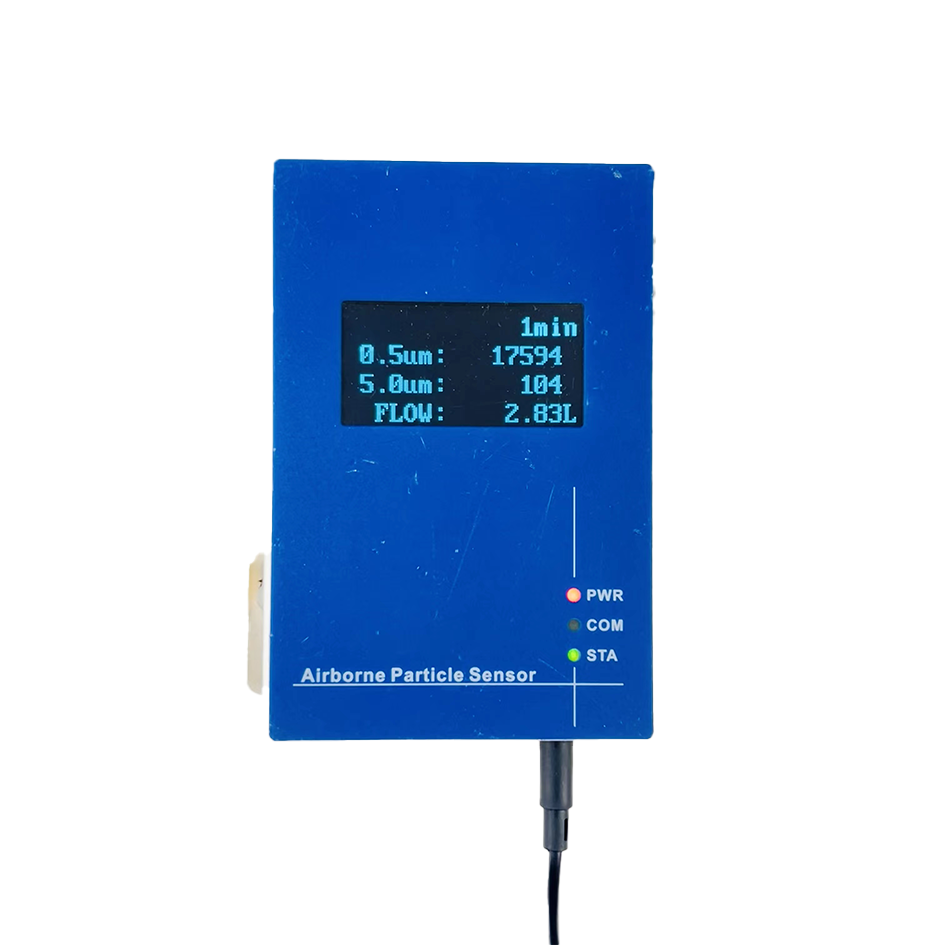
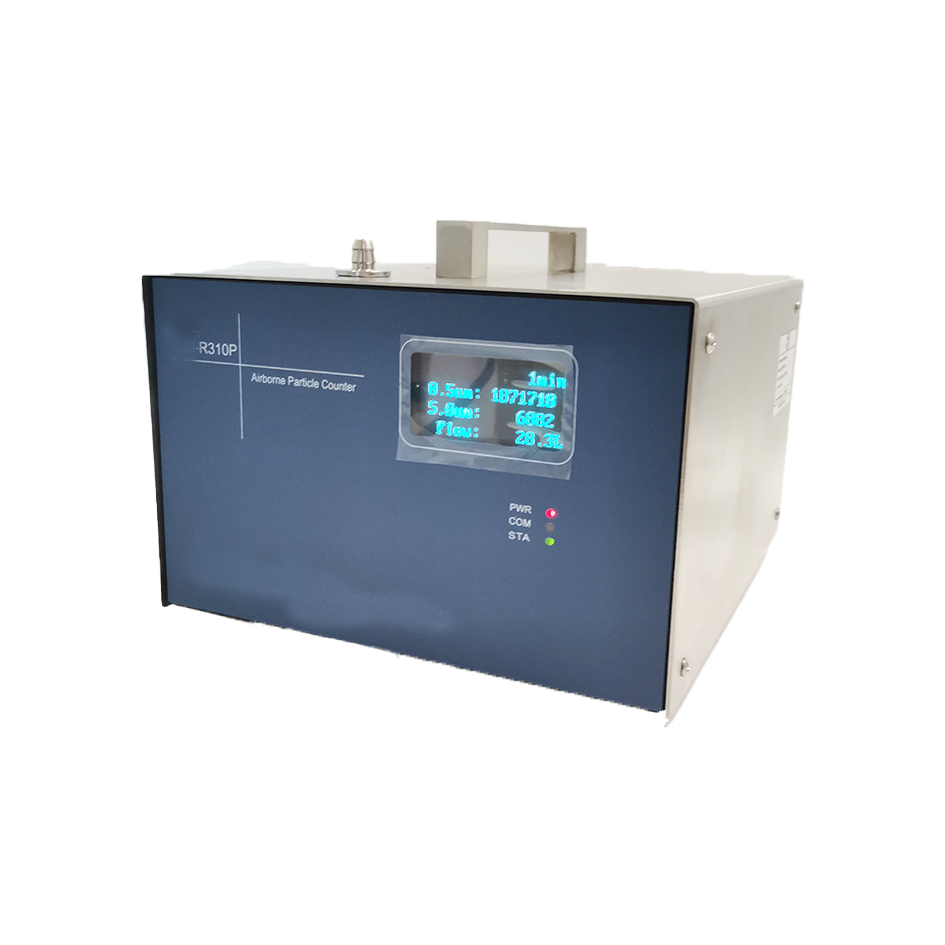
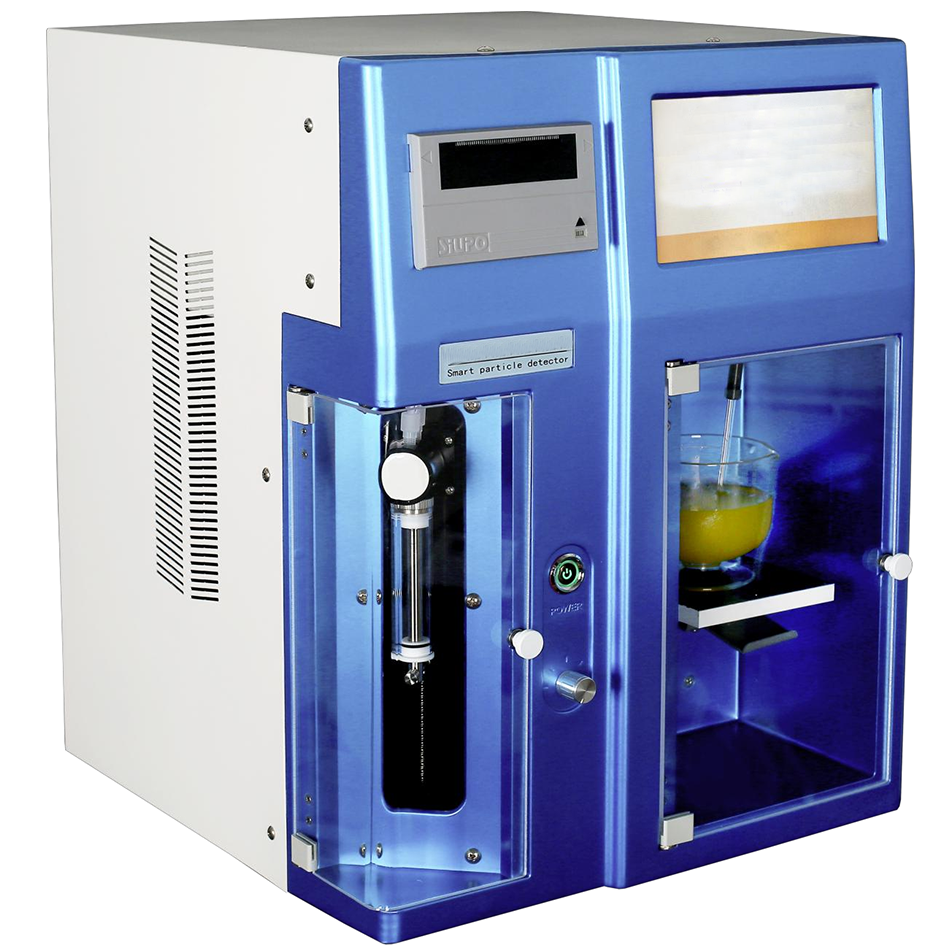
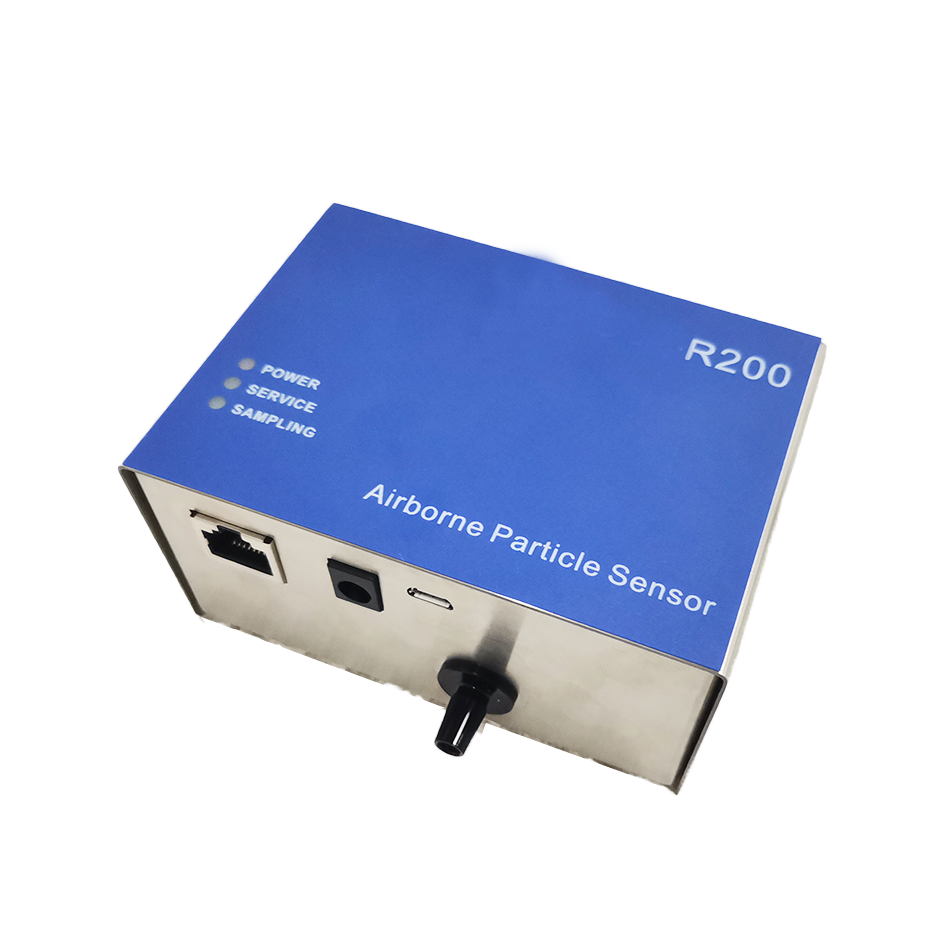
Within the airborne family, Zetron's laser-based instruments include the R210 laser airborne 2.83 L/min fixed online particle counter and the R310P and R200 online particle sensors. On the liquid side, the LPC-7CE intelligent liquid particle counter addresses liquid-borne contamination, while the LPC-16DA intelligent particle detector sits in the intelligent detection line used in automated measurement arrangements. Where air and liquid contamination are both present - for example in ultrapure water loops feeding a clean process - Zetron positions comprehensive monitoring of air and liquid pollution as a single coverage question rather than two separate purchases.
3. Flow rate and examined volume
Flow rate is the metric that converts a count into a concentration. A sampling flow rate of 2.83 L/min, as specified for the Zetron R210 laser airborne fixed online particle counter, tells you how much air moves through the sensing zone per unit of time; the sample volume examined is that flow multiplied by sampling duration.
This matters most in clean environments. When very few particles are present, a small examined volume can return zero counts that say more about the sample size than about the room. When comparing instruments, check the stated flow rate, whether the flow is actively controlled, and how the instrument behaves during continuous or near-continuous operation.
4. Response time, alarms and unattended operation
Detection speed determines whether a particle instrument is a monitoring device or merely a recording device. Zetron describes its particle instruments as delivering results within 3 seconds, with automatic alarm for exceeding limits and support for real-time regional monitoring. For a cleanroom or process line, that combination is what allows corrective action to happen during a shift rather than after a batch.
Review three behaviours before purchase: how quickly a reading appears, how exceedance is signalled, and whether monitoring can continue unattended across a shift or a weekend without manual intervention.
5. Data logging and record integrity
Data logging is where a technical specification becomes a compliance specification. Instruments used in regulated production are expected to produce records that can be retrieved, attributed and retained in a controlled manner, consistent with the electronic-record expectations associated with FDA CFR 21 Part 11 - a standard Zetron states its particle instruments meet.
Ask the supplier how measurement data is stored, how it is exported, who can change settings, and how a historical record is reconstructed months later. The operational convenience features matter here as well: Zetron instruments are equipped with an LCD touchscreen and a built-in printer for instant output of test reports, which shortens the path from measurement to documented evidence.
6. Calibration and verification parameters to request
Calibration parameters should be agreed in writing before an order, because they define the ongoing cost and credibility of the instrument. The parameters worth requesting are: the traceability of the calibration reference, the zero-count or background verification procedure, the procedure used to confirm performance after calibration, the interval between verifications relative to the intensity of use, and the documentation issued with each calibration event.
Averification regime should be proportional to risk. A laboratory instrument used for periodic checks and a fixed online monitor running continuously in a classified area do not carry the same verification burden.
7. Interface, integration and physical form
Finally, match the instrument form to the monitoring architecture. Fixed online instruments integrate into a continuous monitoring system; handheld and portable configurations serve spot checks and mobile measurement points; laboratory instruments serve batch testing and documentation. Zetron instruments support wireless IoT integration and customizable function adaptation, which allows the reporting and connectivity layer to be adapted to an existing monitoring infrastructure rather than the reverse.
Step-by-Step Breakdown: An Eight-Step Selection Workflow
- Define the medium. Air, liquid, or both. This single decision eliminates roughly half of the available instruments and prevents the most expensive mismatch.
- Define the size range and channel resolution. State the smallest particle of interest and the size classes you must report, not just the endpoints of the working range.
- Set the examined volume requirement. Combine the expected particle concentration with the confidence you need in the result, then translate that into a required flow rate and sampling duration.
- Specify response and alarm behaviour. Decide whether the instrument must alert locally, in a monitoring system, or both, and how quickly a reading must appear to be operationally useful.
- Specify the record layer. Define storage, export, access control and retention expectations, consistent with the electronic-record requirements that apply in your environment.
- Agree the calibration and verification regime. Fix traceability, verification interval, post-calibration confirmation and documentation before purchase, and confirm how ongoing support will be delivered.
- Validate with a sample. Test the candidate configuration against your own measurement point rather than a demonstration environment. Differences in sampling point, tubing, airflow and operator handling usually surface here.
- Confirm customization and lifecycle support. If the standard configuration does not fit, confirm the scope of OEM/ODM work, installation, commissioning and maintenance support available across the instrument's service life.
Decision rule of thumb
If two candidate instruments show the same size range but different channel lists, choose on channel resolution. If they show the same channels but different flow rates, choose on examined volume. If both match, decide on data logging, calibration support and lifecycle service - that is where total cost and audit risk are actually determined.
Use Cases: Matching the Instrument to the Environment
Semiconductor and lithium battery manufacturing. These processes combine airborne cleanliness requirements with liquid purity requirements. Zetron's product positioning covers both air and liquid contamination monitoring, which allows a single supplier conversation to address ultrapure water loops and clean process air together.
Biopharmaceutical and pharmaceutical cleanrooms. Here the airborne particle counter is part of the compliance chain, so data logging, report output and record integrity carry the same weight as measurement accuracy. Zetron's stated alignment with ISO14644, EU GMP and FDA CFR 21 Part 11 is the relevant selection driver for these buyers.
Medical facilities. The Zetron H630 particle analyzer is positioned for precision air monitoring in medical facilities, where continuous or scheduled monitoring supports environmental control rather than batch release.
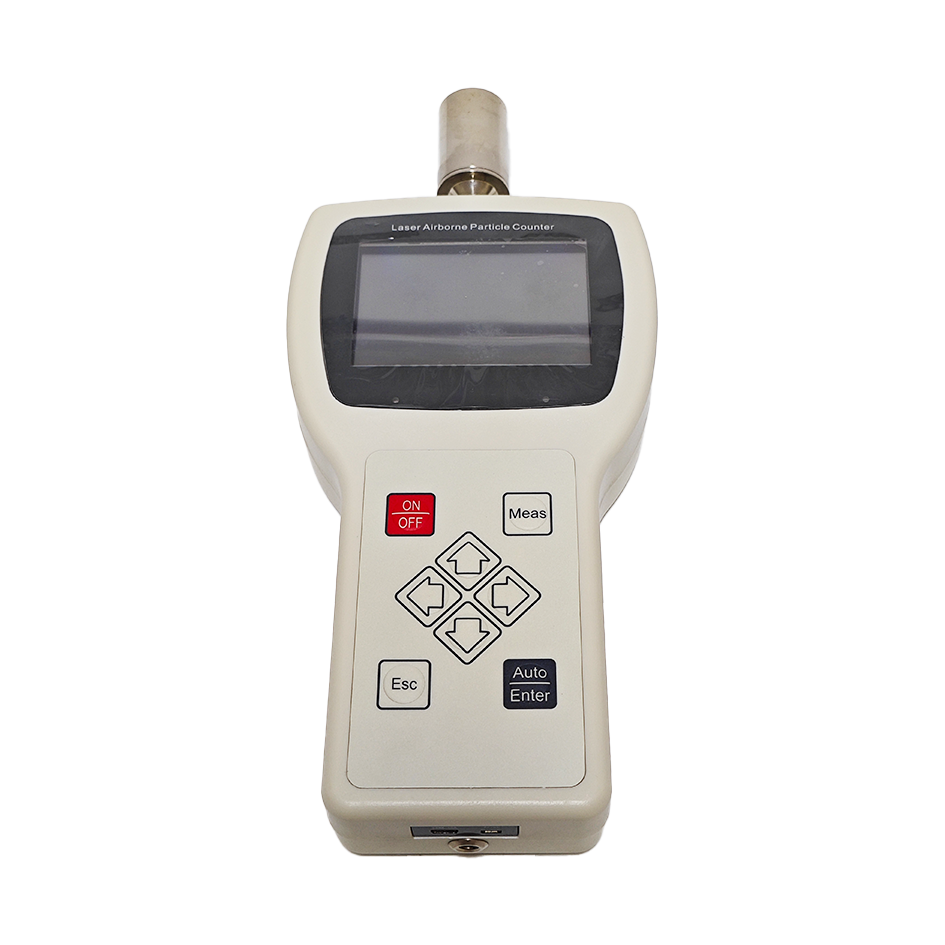
Environmental monitoring and disease control centers. The multi-channel airborne range covering 0.3-25 micrometre supports outdoor and indoor environmental monitoring, where size distribution across several channels matters more than a single total count.
Food and drug testing laboratories. Laboratory users typically need a documented result per test run, which makes instant report output and a clear record trail more valuable than a permanently installed integration.
Pure water and ultrapure water in the chemical industry. Liquid particle counting in the Zetron range is represented by the LPC-7CE intelligent liquid particle counter and the intelligent particle detector line, which address particle contamination in liquid streams.
Comparison Table: Zetron Particle Instrument Families
| Family | Representative models | Medium | Sampling principle | Specification stated in Zetron product data | Typical fit in a monitoring plan |
|---|---|---|---|---|---|
| Laser airborne, fixed online | R210 | Air | Laser airborne, fixed online | 2.83 L/min rated sampling flow | Continuous airborne monitoring with real-time alerting |
| Online particle sensors | R310P, R200 | Air | Online sensing | Online sensor platform | Integration into an existing monitoring system |
| Multi-channel airborne | B330, B550, B1030 | Air | Laser airborne, multi-channel | 0.3-25 micrometre range, multiple channels | Environmental monitoring and size-distribution work |
| General airborne counter | B110-Pro | Air | Airborne particle counting | Airborne particle counter | Routine air checks and documentation |
| Precision air analyzer | H630 | Air | Particle analysis | Positioned for precision air monitoring in medical facilities | Healthcare and controlled-environment air monitoring |
| Liquid particle counting | LPC-7CE | Liquid | Liquid particle counting | Intelligent liquid particle counter | Pure water, ultrapure water and liquid contamination control |
| Intelligent particle detection | LPC-16DA | Automated detection line | Intelligent particle detection | Intelligent particle detector | Automated measurement arrangements requiring a detector stage |
Only specifications stated in Zetron's own product data are reproduced above. Confirm current datasheet values, channel lists and configuration options with the supplier before design freeze or tender submission.
FAQ
Which standards should a particle analyzer support in a regulated environment?
The standards that apply are determined by the environment, not by the instrument category. In cleanroom classification, ISO14644 is the reference framework; in pharmaceutical manufacturing, EU GMP expectations govern how particle data is used; and where measurement records are stored electronically, FDA CFR 21 Part 11 shapes the record layer. Zetron states that its particle instruments meet ISO14644, EU GMP and FDA CFR 21 Part 11 requirements, and its instruments are equipped with an LCD touchscreen and a built-in printer for instant test report output.
How do I judge whether a supplier can customize a particle analyzer for my application?
Look for a defined engineering process rather than a statement of willingness. Zetron provides full-chain OEM/ODM services covering needs diagnosis, solution design, installation, commissioning and maintenance support, and its particle instruments support wireless IoT integration with customizable function adaptation. That means connectivity, reporting behaviour and functional adaptation can be aligned with an existing monitoring architecture. A supplier that can describe each stage of that chain - and show where your requirement enters it - can usually absorb a non-standard sampling point or reporting requirement.
What drives the cost of a particle analyzer configuration?
Cost is driven by configuration choices rather than by brand tier. The main drivers are the sampling medium (air, liquid, or both), the number of measurement channels, the sampling system and flow capability, the level of integration required (standalone, online fixed, or IoT-connected), the record-keeping layer, and the calibration and lifecycle support committed by the supplier. Because each of these changes the engineering work behind the instrument, the most reliable way to control cost is to define the measurement requirement precisely before requesting a configuration - an over-specified channel list costs more than it returns.
Can we validate a configuration with a sample before full deployment?
Yes, and it is the most effective way to close the gap between datasheet performance and site performance. A sample validation lets you test the candidate instrument against your own sampling point, airflow conditions and operator routines, and it usually exposes differences that a demonstration cannot. Zetron's customization process begins with needs diagnosis and solution design, which makes sample-based validation a natural first step; the company can be contacted at info@bjzetron.com to arrange it.
What affects lead time on a customized particle analyzer order?
Lead time follows the depth of customization. A configuration that matches an existing platform moves through production and calibration stages, while a customized requirement adds needs diagnosis, solution design, integration of the sampling or connectivity layer, and commissioning preparation before shipment. The practical recommendation is to raise the delivery schedule during the RFQ stage rather than after the purchase order, so that calibration, site preparation and validation activities can be sequenced around it. For a specific schedule, quote or technical consultation, contact Zetron at info@bjzetron.com or +86-15699785629, or visit www.zetroncn.com.
Conclusion
Particle analyzer selection is decided by measurement fit, not by the widest number in a catalogue. The metrics that carry the decision are the size range and its channel boundaries, the sampling principle that matches the medium, the flow rate that determines how much sample is actually examined, the response and alarm behaviour that makes monitoring operational, the data logging layer that makes results defensible, and the calibration and verification routine that keeps those results credible over time.
For buyers working across both air and liquid contamination, the same framework applies twice, because airborne laser sensors and liquid particle counters follow different sampling principles and require different calibration and maintenance practice. Zetron supplies both families - from the R210 laser airborne fixed online particle counter and the R310P, R200 online particle sensors, through the B330, B550 and B1030 multi-channel airborne range and the H630 particle analyzer for medical facilities, to the LPC-7CE intelligent liquid particle counter and the LPC-16DA intelligent particle detector - alongside full-chain OEM/ODM services from needs diagnosis to installation, commissioning and maintenance support.
Next step: turn the metrics into a configuration
Send your medium, required size channels, sampling point conditions and record-keeping requirements, and Zetron will work through the selection criteria with you - including OEM/ODM adaptation where the standard configuration does not fit.
Email: info@bjzetron.com | Tel: +86-15699785629 | Website: www.zetroncn.com
Beijing Zetron Technology Co., Ltd. - 19B, Office Tower, Oriental Ginza, No.48 Dongzhimenwai Street, Dongcheng District, Beijing, China.
Have Questions or Need More Details?
Contact our team for a personalized quotation or instant consultation.
Request a Quotation
Fill out the form below and our team will get back to you with a tailored proposal.
WhatsApp Direct Chat
Prefer to chat in real-time? Message us on WhatsApp for instant assistance & quick answers.
- Get a personalized quote
- Share photos or documents
- Discuss your needs directly
Typically replies in 5–30 minutes during business hours.