
Liquid Particle Counters in Industrial Process Monitoring: An Application Guide
In short: industrial particle monitoring is decided by sampling mode before it is decided by model number. Online particle sensors stay attached to a line and report continuously for trend detection and alarm response, while sampling-based intelligent particle detectors produce a discrete measurement and a printed record at a chosen point. Zetron builds both classes, plus the fixed airborne and multi-channel instruments that support cleanroom and environmental programs, so the selection question becomes a specific one: which equipment class fits which monitoring job?
Particulate contamination in a fluid or in the air around a process is one of the few variables that can be measured directly, repeatedly, and compared against a documented limit. That makes the particle counter a compliance instrument as much as a process instrument. The value it produces has to survive a deviation investigation, a customer quality review, or an audit — not only a shift handover.
This guide is written for buyers, process engineers, and quality teams who already know they need particle monitoring and now have to decide how to deploy it. It maps monitoring scenarios — a live hydraulic loop, a purified water circuit, a pharmaceutical manufacturing environment, a cleanroom classification route — to the equipment class that matches the job, using Zetron's published product categories and stated specifications only.
The Monitoring Problem: Continuous Trend or Discrete Proof?
The first decision in any particle monitoring design is not which instrument to buy. It is what the monitoring program is supposed to produce: a continuous trend that triggers action while the process is still running, or a discrete, documented measurement that proves a defined condition at a defined moment.
A program built only on manual sampling fails through gaps. Between two sampling rounds, a fluid loop can change condition without anyone noticing, and the resulting record is a series of snapshots with no visibility into what happened between them. A program built only on fixed sensors fails differently: sensors are installed, calibrated, and then trusted, and without periodic independent verification a drifting trend can go unchallenged because nothing else contradicts it.
In practice, most industrial programs are not a choice between online and manual. They are a division of labour: online sensing where the line is live and an alarm has operational value, and sampling-based measurement where the decision is discrete — an incoming fluid check, a batch release support measurement, a root-cause investigation, or a correlation check against a fixed sensor.
Drawing that line in the right place is what this guide addresses, and it is also where most procurement errors occur, because a quotation for an instrument class is easy to compare while a monitoring design is not.
Industry Background: Why Air and Liquid Monitoring Share One Compliance Framework
Zetron is the brand of Beijing Zetron Technology Co., Ltd., a Beijing-based developer and manufacturer of gas and air detection equipment, alarms, detectors and analyzers, online monitoring and pretreatment systems, miniature air monitoring stations, odor online monitoring systems, remote laser methane gas detectors, particle counters, air quality monitoring systems, and environmental safety monitoring gas monitoring cloud platforms. The company has focused on the gas and air detection field for nearly 20 years and positions itself as a one-stop industrial testing equipment solution provider.
Regulated manufacturing tends to pull particle monitoring into the same documentation system whether the measured medium is air or liquid. The standards most often cited in pharmaceutical and semiconductor environments — ISO 14644 for cleanroom classification, EU GMP for medicinal product manufacturing, and FDA CFR 21 Part 11 for electronic records and signatures — all place weight on how a measurement is captured, stored, and reproduced, not only on the measurement itself.
Zetron states that its particle counters are designed to meet ISO 14644, EU GMP, and FDA CFR 21 Part 11, and that its broader product range carries ISO9001:2005 quality management system certification and SGS testing certification, together with CE, RoHS, FCC, and ATEX certification. For a buyer, that combination matters in two different ways: the metrological claims (ISO 14644, EU GMP) support the monitoring decision, while the management and product-safety certifications (ISO9001:2005, SGS, CE, RoHS, FCC, ATEX) support the supplier approval decision.
Zetron lists its particle counter and monitoring applications as semiconductor, lithium battery, chemical industry including pure water and ultrapure water, environmental monitoring, disease control centers, food and drug testing, and biopharmaceutical cleanrooms. These are the environments in which the equipment classes below are usually specified.
Applicability note: the applicability of any standard to a specific installation is site-specific and is normally confirmed between the buyer's quality function and the supplier. This guide describes how Zetron's published product categories map to monitoring scenarios; it does not certify any individual installation.
Detailed Solution: Mapping Zetron's Particle Counter Classes to Monitoring Needs
Zetron's particle monitoring range separates into four practical classes. The separation is useful because each class answers a different monitoring question, and mixing them up is the most common source of an instrument that works but does not fit.
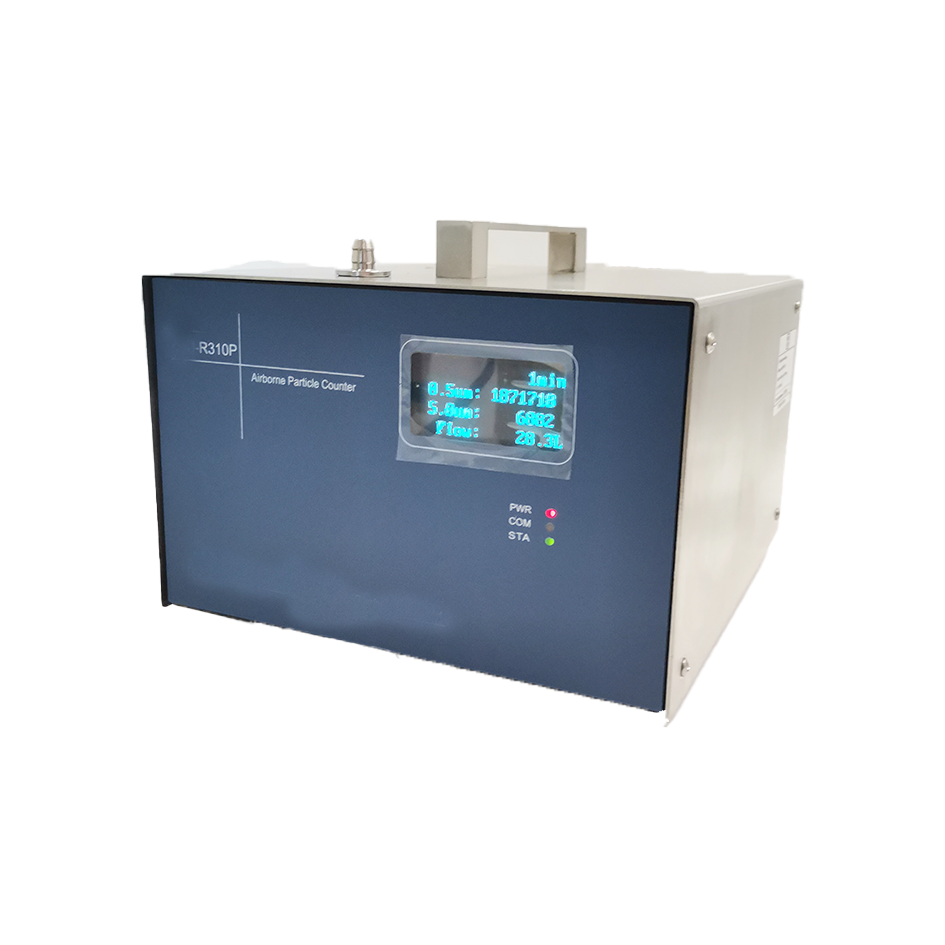
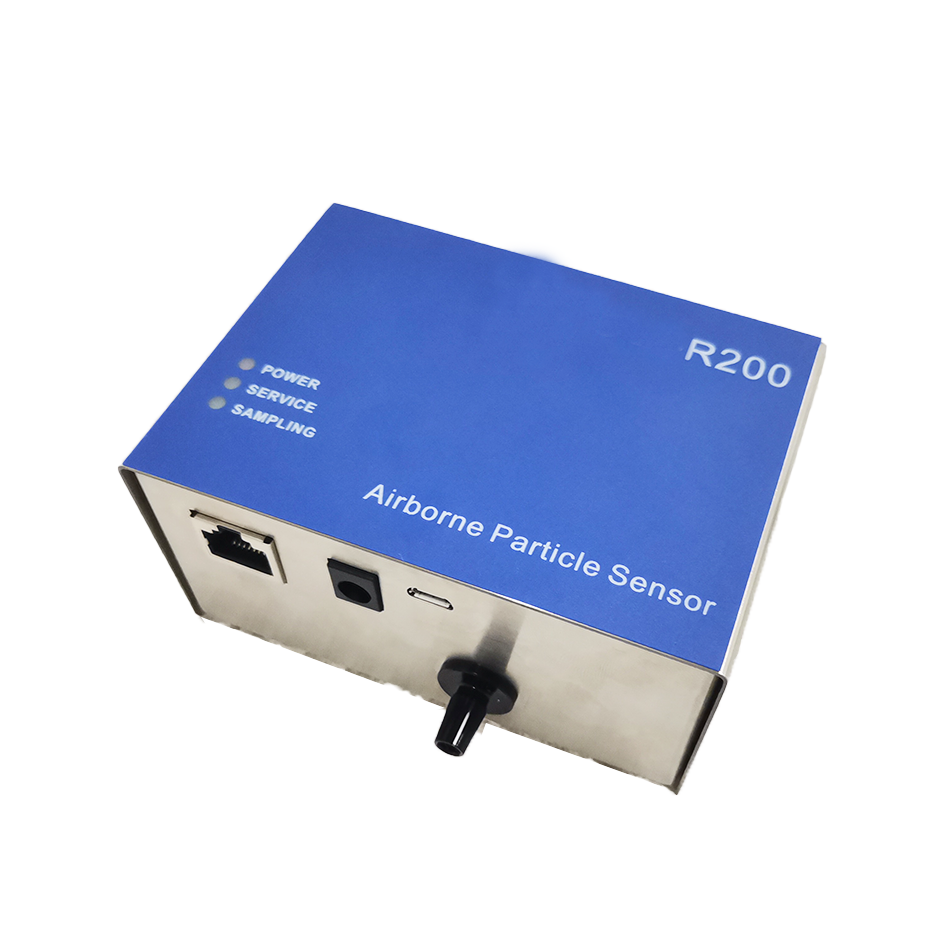
1. Continuous monitoring on a live line: R310P and R200 Online Particle Sensors
The R310P Online Particle Sensors and R200 Online Particle Sensors are the class intended for permanent installation where readings are wanted while the process is running. Zetron describes its particle counter range as delivering results within 3 seconds, with automatic alarm for exceeding limits and support for real-time regional monitoring — the characteristics that make continuous sensing useful, because a value that arrives after the process step has finished cannot stop that step.
This is also the class where integration decides the deployment. Zetron states that its particle counters support wireless IoT integration and customizable function adaptation, which is what allows online sensors to feed a monitoring platform rather than a local display only. Zetron's product range includes an environmental safety monitoring gas monitoring cloud platform, so a buyer planning a multi-point installation should confirm how sensor data is expected to reach that layer.
Two practical limits belong in any specification written around this class. First, an online sensor must be installed at a point that represents the fluid or environment being judged; a sensor on a bypass line measures the bypass. Second, the published product material describes these units as online particle sensors, so the sampling medium, wetted path, and installation configuration for a specific fluid should be confirmed directly with Zetron before the point is fixed in a design.
2. Fixed-point airborne monitoring: R210 Laser Airborne 2.83L/Min Fixed Online Particle Counter
Not every monitoring point is in the fluid. Where the controlled condition is the environment around an open process — a filling zone, an aseptic handling area, a cleanroom zone — the monitoring point is airborne and the instrument is fixed in place. The R210 Laser Airborne 2.83L/Min Fixed Online Particle Counter belongs to this class, with a 2.83 L/min sample flow stated in the product designation.
The distinction matters at procurement stage because airborne and liquid instruments are not interchangeable and should not be used as substitutes for one another, even where the reporting output looks similar.
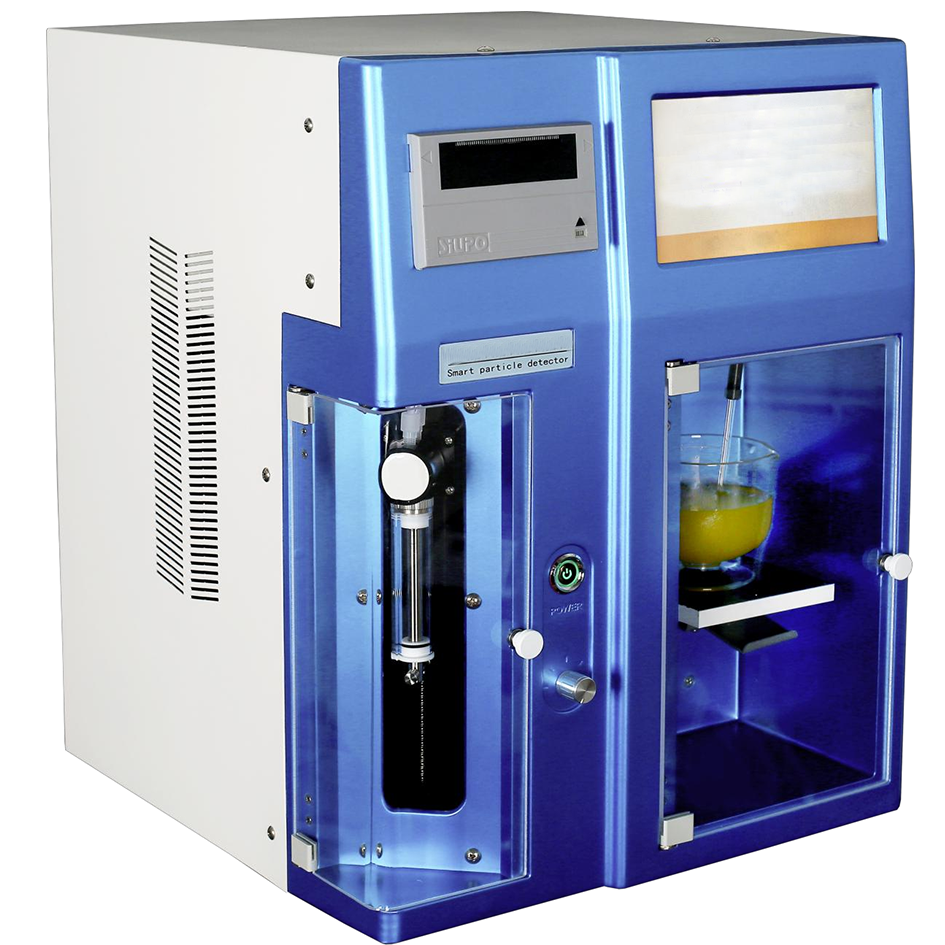
3. Sampling-based verification: LPC-7CE Intelligent Liquid Particle Counter and LPC-16DA Intelligent Particle Detector
The LPC-7CE Intelligent Liquid Particle Counter addresses the discrete-measurement job in liquid systems. Zetron's stated specification for the counter range includes an LCD touchscreen, a built-in printer, and instant output of test reports — features that matter less for their convenience than for what they remove from the workflow: the manual transcription step between measurement and record.
The LPC-16DA Intelligent Particle Detector sits in the same intelligent-detector family and serves the same logic of taking the instrument to the point of interest rather than bringing the sample to a laboratory. Zetron also states that its particle counter technology covers submicron particle detection, which is the technical basis for using this class in applications where the particles of concern are below the size range visible to simpler methods.
Where this class fits best is in three recurring situations: verifying a fluid before it enters a process, investigating a deviation flagged by an online sensor, and providing an independent measurement at defined intervals so that a fixed sensor's trend is periodically confirmed rather than assumed.
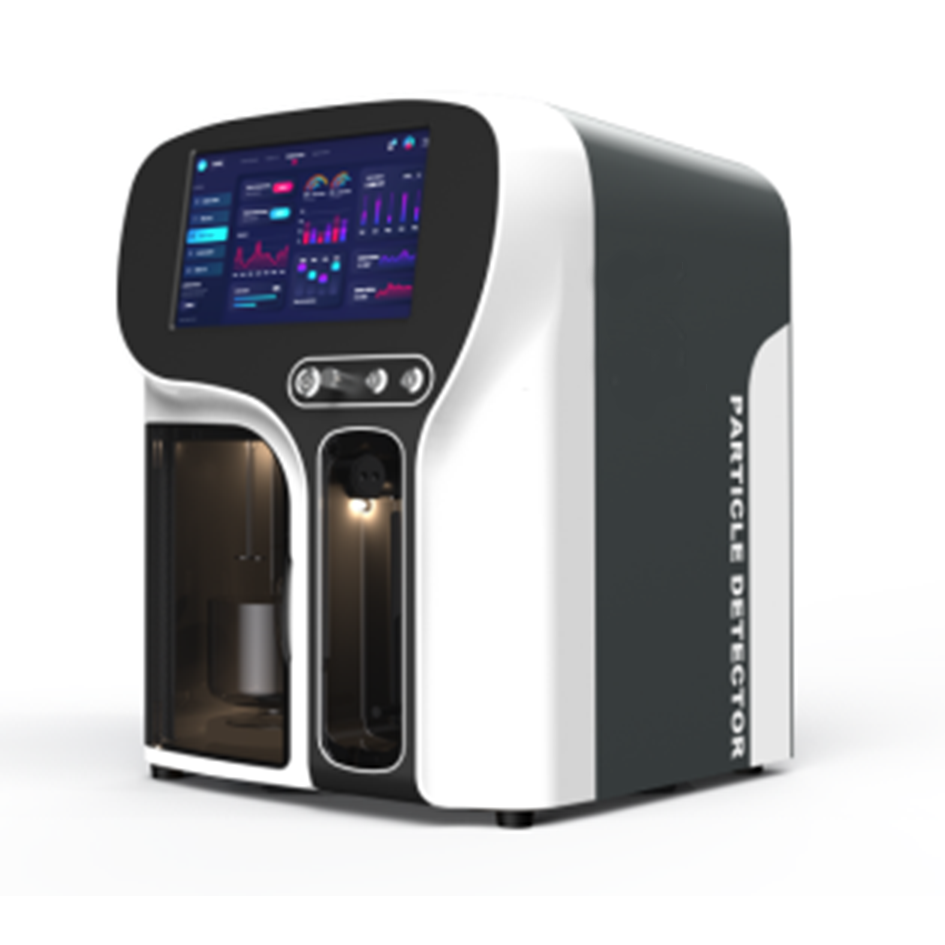
4. Surveys, classification routes, and multi-channel work: B110-Pro, B330/B550/B1030, and H630
The remaining classes cover monitoring jobs where a route is walked or a size distribution is required rather than a single point being watched. The B110-Pro Airborne Particle Counter suits route-based surveying. The B330, B550, B1030 Multi-Channel Airborne Particle Counter (0.3-25 μm) for Environmental Monitoring covers multi-channel size measurement across the stated 0.3 to 25 μm range. The H630 Particle Analyzer for Precision Air Monitoring in Medical Facilities is positioned for precision air monitoring in medical environments.
These are airborne classes. They support the environmental side of a process monitoring program — cleanroom verification, classification support, environmental monitoring — and they are not substitutes for liquid measurement in a fluid loop.
Step-by-Step: Matching an Instrument Class to a Monitoring Need
The selection sequence below is ordered deliberately: each step constrains the next, and skipping a step usually produces a technically capable instrument attached to the wrong decision.
Step 1 — Define the control point and the medium
Write down what is being judged: a flowing fluid in a loop, a stored or dispensed liquid, or the air in a controlled zone. The medium alone eliminates half the range, because liquid and airborne instruments are separate classes in Zetron's catalogue.
Step 2 — Decide whether the point is continuous or discrete
A point earns continuous monitoring when a value arriving during the process has operational value — when an exceedance can trigger a diversion, a hold, or an immediate response. A point is discrete when the decision happens at a defined moment: release, receipt, investigation, or periodic verification.
Step 3 — Select the class, then the model
Continuous liquid or process points point to the online sensor class (R310P, R200). Discrete liquid checks point to the intelligent liquid counter class (LPC-7CE) or the intelligent detector class (LPC-16DA). Fixed environmental points point to the R210. Route surveys and size-distribution work point to the B110-Pro, the B330/B550/B1030 multi-channel series, or the H630 analyzer.
Step 4 — Define what the record must prove
If the record must stand alone in an audit, the output format is part of the specification. Zetron's stated LCD touchscreen, built-in printer, and instant test report output support a self-documenting workflow; the stated support for FDA CFR 21 Part 11 and EU GMP addresses the electronic records side. Buyers in regulated environments should confirm the exact record and data-handling configuration during the quotation stage.
Step 5 — Plan integration before installation
Where multiple points are planned, decide early how data reaches the monitoring layer. Zetron states wireless IoT integration and customizable function adaptation, and offers a cloud platform for environmental safety monitoring, so the integration scope should be defined with the supplier rather than added after the instruments arrive.
Step 6 — Plan verification and service from day one
An online sensor without a verification routine is an assumption generator. Pair each continuous point with a periodic sampling-based check, and confirm with the supplier how calibration, maintenance, and spare support are handled over the instrument's life. Zetron provides OEM/ODM services covering needs diagnosis and solution design through installation, commissioning, and maintenance support, which is relevant where a multi-point program is being phased in.
Selection checklist
- Control point and medium defined in writing.
- Continuous versus discrete decision documented per point.
- Instrument class matched to the decision, not to the budget line.
- Required record format and data-handling configuration confirmed.
- Integration path to the monitoring platform agreed.
- Verification interval and service route agreed before purchase.
Use Cases: Where Each Class Earns Its Place
Zetron lists semiconductor, lithium battery, chemical industry including pure water and ultrapure water, environmental monitoring, disease control centers, food and drug testing, and biopharmaceutical cleanrooms among its application areas. Within those environments, the class decision usually follows a recognizable pattern.
Semiconductor and ultrapure water circuits
Where a water circuit is continuously in service and cleanliness is a process requirement, the online class carries the trend and the alarm, while the LPC-7CE class handles discrete verification points. The combination is what allows a deviation flagged by a sensor to be confirmed with an independent measurement rather than a second reading from the same sensor.
Chemical processing and pure water
Chemical processes with pure water or ultrapure water monitoring typically place continuous sensing where a change would propagate downstream, and sampling-based checks at receipt or at the boundary between process stages.
Fluid power and hydraulic systems
A hydraulic loop is a fluid system where particulate condition is monitored as part of system health. Continuous sensing serves the running loop; sampling-based detectors serve inspection intervals and fault investigation. The specific medium compatibility and installation configuration for any Zetron online sensor in a given hydraulic circuit should be confirmed with the supplier before the point is designed in.
Biopharmaceutical cleanrooms and aseptic areas
Here the environmental side dominates: fixed airborne monitoring (R210), multi-channel airborne measurement (B330, B550, B1030 across 0.3-25 μm), and route-based surveying (B110-Pro). Liquid monitoring via the LPC-7CE and LPC-16DA classes supports the fluid side of the same quality system. The H630 Particle Analyzer is positioned for precision air monitoring in medical facilities.
Food and drug testing, disease control, and environmental monitoring
These environments tend to need a mix of laboratory-side discrete measurement and fixed-point environmental monitoring, which is why Zetron's product range spans the intelligent detector classes and the fixed and portable airborne classes together.

Comparison Table: Equipment Classes at a Glance
The table below compares the classes using only Zetron's published product designations and stated specifications. It is a selection aid, not a rating.
| Equipment class | Zetron models in this class | Monitoring mode | Typical monitoring job | Verified notes from published material |
|---|---|---|---|---|
| Online particle sensors | R310P Online Particle Sensors; R200 Online Particle Sensors | Continuous, installed | Live process lines needing trend and alarm response | Results within 3 seconds; automatic alarm for exceeding limits; real-time regional monitoring; wireless IoT integration; customizable function adaptation |
| Fixed online airborne counter | R210 Laser Airborne 2.83L/Min Fixed Online Particle Counter | Continuous, fixed point | Environmental control point in a cleanroom or controlled zone | Airborne class with 2.83 L/min sample flow stated in the designation |
| Intelligent liquid counter | LPC-7CE Intelligent Liquid Particle Counter | Sampling-based, discrete | Verification, receipt checks, deviation investigation | LCD touchscreen; built-in printer; instant test report output; submicron particle detection technology |
| Intelligent particle detector | LPC-16DA Intelligent Particle Detector | Sampling-based, discrete | Point checks and investigative measurements | Part of the intelligent detector family; measurement medium and configuration to be confirmed with Zetron |
| Portable airborne counter | B110-Pro Airborne Particle Counter | Survey route | Routed measurement across multiple locations | Airborne class for survey-style monitoring |
| Multi-channel airborne counter | B330, B550, B1030 Multi-Channel Airborne Particle Counter (0.3-25 μm) for Environmental Monitoring | Multi-channel | Size-distribution work and environmental monitoring | Multi-channel measurement across the stated 0.3-25 μm range |
| Particle analyzer | H630 Particle Analyzer for Precision Air Monitoring in Medical Facilities | Precision air monitoring | Medical facility air monitoring | Positioned for precision air monitoring in medical facilities |
FAQ
Which standards and certifications should a liquid particle counter support for regulated process monitoring?
Zetron states that its particle counters are designed to meet ISO 14644, EU GMP, and FDA CFR 21 Part 11. At company level, Zetron holds ISO9001:2005 quality management system certification and SGS testing certification, and its products carry CE, RoHS, FCC, and ATEX certification. For a regulated buyer, the practical reading is that the metrological standards support the monitoring decision while the management and product-safety certifications support supplier approval. Whether a specific standard applies to a specific line remains a site-level determination.
Can one instrument class cover both liquid particle monitoring and airborne particle monitoring?
No. Zetron's published range separates liquid and airborne instruments into distinct classes. Liquid measurement is handled by the LPC-7CE Intelligent Liquid Particle Counter and the LPC-16DA Intelligent Particle Detector. Airborne measurement is handled by the R210 fixed online counter, the B110-Pro, the B330/B550/B1030 multi-channel series, and the H630 analyzer. Zetron describes its overall particle counter offering as covering both air and liquid pollution, but that coverage is delivered across the range rather than by a single instrument.
What drives the budget in a particle monitoring deployment?
Zetron's published material does not list prices, so budget should be built from a configured quotation rather than from a unit price. In practice the cost drivers are the number of continuous points versus discrete points, the integration scope where wireless IoT or platform connectivity is required, the degree of function adaptation or OEM/ODM customization, and the service and calibration arrangements over the instrument's life. Defining the monitoring design first — control points, medium, and record requirements — keeps the quotation comparable across suppliers.
Can a buyer validate a particle counter before committing to a full order?
For a Zetron deployment, the practical route is to confirm the monitoring design first and then request a sample or trial arrangement for the specific model class, so that the unit is validated against the actual application — fluid or air, point location, and required record format — rather than against a generic specification. Zetron provides OEM/ODM services from needs diagnosis and solution design through installation, commissioning, and maintenance support, which allows the validation step and the configuration step to be handled together. Sample and quotation requests can be sent to the team at www.zetroncn.com or by email.
What information is needed to confirm lead time?
Zetron's published material does not state standard lead times, so delivery should be confirmed against the specific configuration. The information that most affects the answer is the model class and quantity, the measurement medium and installation configuration for online sensors, any function adaptation or OEM/ODM customization, and whether commissioning support is included. Supplying these details at inquiry stage allows the schedule to be quoted against the actual scope rather than an assumed one.
What to Do Next
The most reliable way to specify a particle monitoring program is to start from the control points and work outwards: medium first, then continuous versus discrete, then class, then model, then record and integration requirements. Buyers who arrive at a supplier with that sequence already written tend to get comparable quotations, and they tend to avoid the common outcome where an instrument is technically sound but attached to a decision it was never meant to serve.
Zetron's range covers the online sensor class, the sampling-based liquid counter and detector classes, and the fixed, portable, and multi-channel airborne classes, supported by ISO9001:2005, SGS, CE, RoHS, FCC, and ATEX certification and by OEM/ODM service from solution design to maintenance support.
Request a Sample, Quotation, or Configuration Review
Share your monitoring points, medium, and record requirements, and the Zetron team can map them to the appropriate equipment class and return a configured quotation.
Beijing Zetron Technology Co., Ltd. — Brand: Zetron
Tel: +86-15699785629 | Email: info@bjzetron.com
Website: www.zetroncn.com
Address: 19B, Office Tower, Oriental Ginza, No.48 Dongzhimenwai Street, Dongcheng District, Beijing, China

Have Questions or Need More Details?
Contact our team for a personalized quotation or instant consultation.
Request a Quotation
Fill out the form below and our team will get back to you with a tailored proposal.
WhatsApp Direct Chat
Prefer to chat in real-time? Message us on WhatsApp for instant assistance & quick answers.
- Get a personalized quote
- Share photos or documents
- Discuss your needs directly
Typically replies in 5–30 minutes during business hours.