
What Is a Particle Counter? A Beginner's Explainer on Air, Liquid, and Online Sensing
A particle counter is an instrument that counts and sizes particles suspended in air or in a liquid. It does not return a single figure. It reports how many particles fall into each size channel inside a defined sample volume, which is what makes the reading comparable with a cleanliness standard.
Most industrial buyers meet this category for the first time under pressure: a cleanroom is being commissioned, a pure-water loop needs monitoring, or a pharmaceutical line has to demonstrate particulate control. The catalogue then presents six overlapping names — airborne particle counter, laser airborne particle sensor, liquid particle counter, online particle sensor, intelligent particle detector and particle analyzer — and it is not obvious which one belongs in which position. This explainer separates them, then previews the terms and acceptance criteria worth settling before a purchase order.
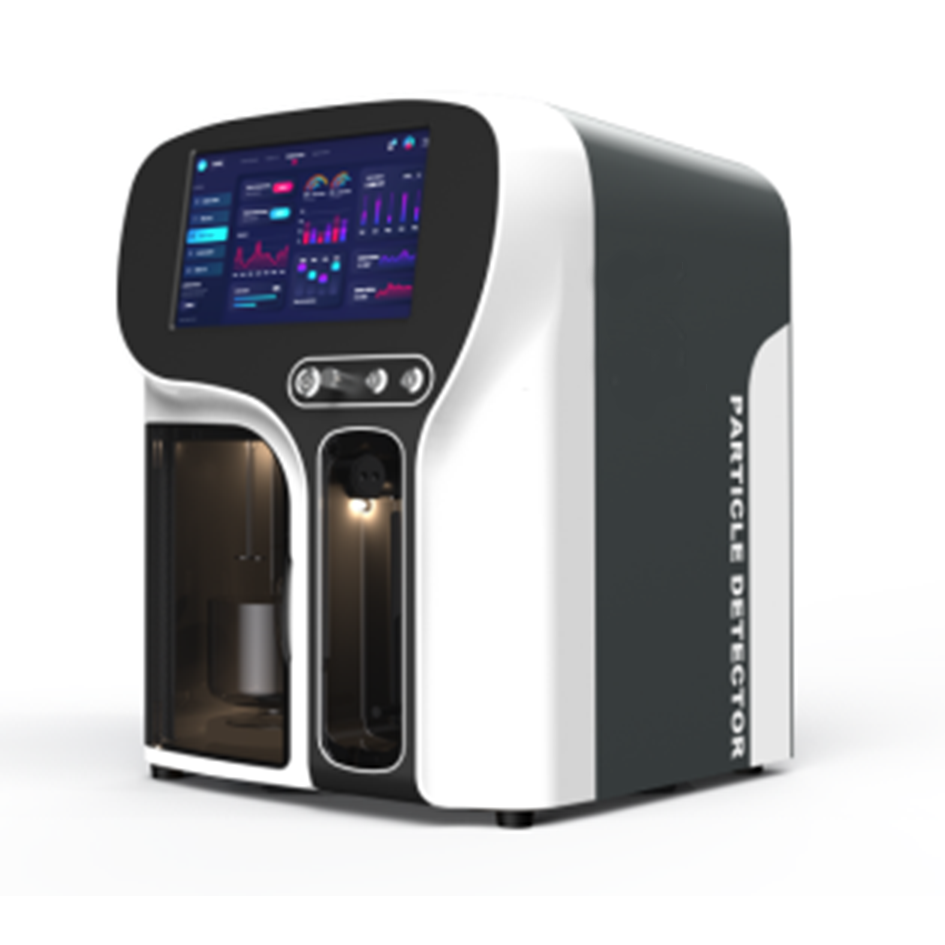
Problem Definition: Why 'Particle Counter' Is Hard to Buy the First Time
A count reading only has meaning when three things are fixed: the medium being sampled, the size channels being reported, and the volume or flow over which the count is taken. Change any one of them and two correctly functioning instruments will appear to disagree, because they were never measuring the same thing.
That single fact explains most first-purchase mistakes. There are two failure modes worth naming:
- Buying the wrong type. An ambient-air instrument cannot evaluate a liquid. A fixed online sensor is not the right tool for verifying one room before handover. A sample-based instrument is not a substitution for continuous trending.
- Buying the wrong specification level. Two airborne counters may both be described as particle counters while reporting different size ranges, different channel counts and different sampling rates. Without a stated basis, the output cannot be mapped to a cleanroom class or to an internal audit.
The practical answer for a new buyer is not to compare boxes. It is to identify the measurement job first, then read the datasheet against that job, and only then look at the commercial terms.
Industry Background: From Spot Checks to Continuous Particulate Data
Particulate contamination is regulated through cleanliness classes rather than through any single device. Zetron states that its particle counters are designed to meet ISO14644 for cleanroom classification, EU GMP for pharmaceutical manufacturing, and FDA CFR 21 part 11 for electronic records — the three references that most often appear in buyer specifications in regulated industries.
Two shifts explain why this product category keeps expanding. First, monitoring has moved from periodic manual sampling toward fixed, continuous sensing, because a room that is checked once per shift can drift between checks. Second, measurement data now has to travel: supervisory systems, trend records and audit trails all expect instrument output rather than hand-written notes. Both shifts favour sensors that stay installed and stay connected, but they do not retire sample-based instruments, because acceptance testing, investigation and liquid analysis still need a measurement taken at a chosen moment.
Beijing Zetron Technology Co., Ltd. (brand Zetron) is a Beijing-based manufacturer and one-stop industrial testing equipment solution provider that has focused on the gas and air detection field for nearly 20 years. Its product lines cover gas detection equipment, alarms, detectors and analyzers, online monitoring and pretreatment systems, miniature air monitoring stations, odor online monitoring systems, remote laser methane gas detectors, particle counters and air quality monitoring systems, and an environmental safety monitoring gas monitoring cloud platform. Particle counting therefore sits alongside gas detection inside the same portfolio rather than as a standalone product line. Zetron operates multiple professional production lines and holds ISO9001:2005 quality management system certification and SGS testing certification, together with CE, RoHS, FCC and ATEX certification for its devices.
Detailed Solution: The Six Device Types, Defined
1. Airborne Particle Counter
An airborne particle counter samples ambient air and counts the particles suspended in it, sorting them by size. It is the instrument used to classify a cleanroom, verify an HVAC zone, or document environmental monitoring in a production area. Zetron's airborne range includes the B110-Pro Airborne Particle Counter and the B330, B550 and B1030 Multi-Channel Airborne Particle Counters, which are specified for a 0.3–25 μm size range and positioned for environmental monitoring.

2. Laser Airborne Particle Sensor
A laser airborne particle sensor is the laser-based airborne detection unit, normally installed at a fixed point. Zetron's example is the R210 Laser Airborne 2.83 L/min Fixed Online Particle Counter: the naming states laser-based airborne detection, a 2.83 L/min sampling rate, fixed installation and online operation. Sensors of this class are chosen when the measurement point never moves and the data has to be continuous.
3. Liquid Particle Counter
A liquid particle counter applies the same counting principle to a liquid sample instead of air. It is used where particulate load in water or process chemistry matters — the classic cases being pure water and ultrapure water in the chemical industry, and process liquids in semiconductor manufacturing. Zetron's liquid instrument is the LPC-7CE Intelligent Liquid Particle Counter.
4. Online Particle Sensor
An online particle sensor is a fixed sensing unit that reports continuously to a monitoring system instead of producing one-off readings. It is the type to specify when the requirement is trend data, alarm escalation or unattended operation. Zetron lists the R310P and R200 Online Particle Sensors in this role, and its particle counter platform supports wireless IoT integration.
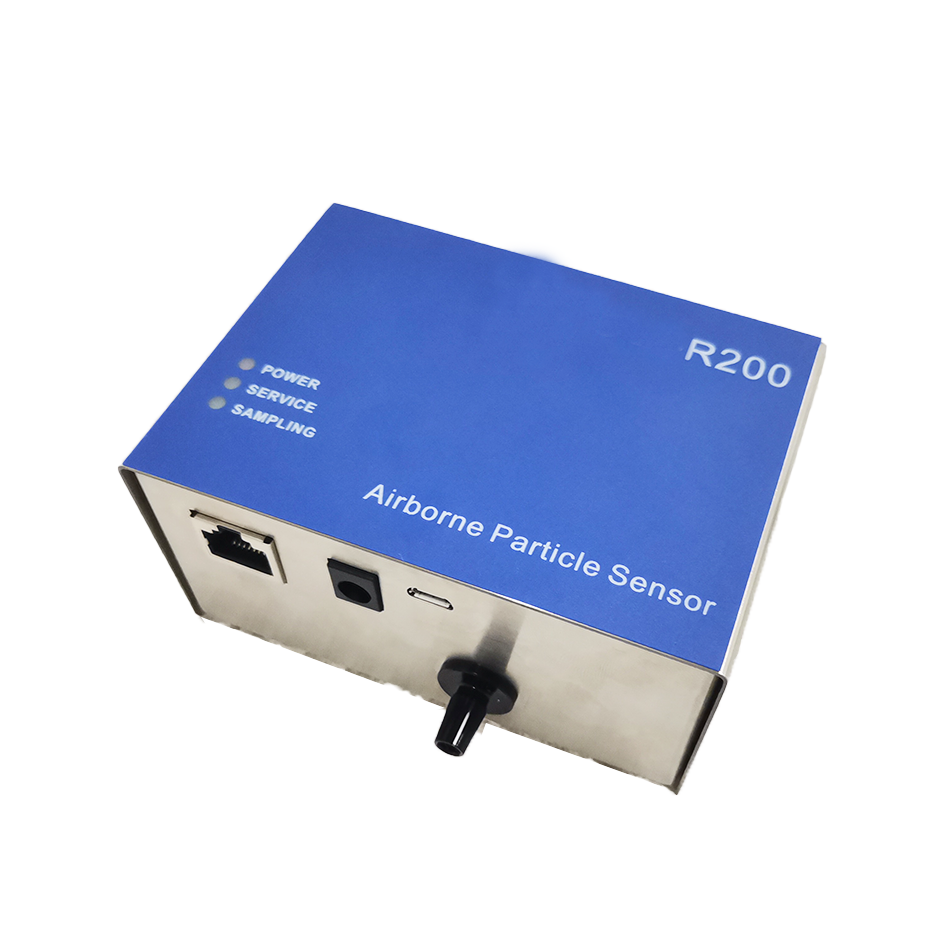
5. Intelligent Particle Detector
'Intelligent' in this category refers to local processing: the instrument displays, decides and reports without depending on a separate controller. Zetron's LPC-16DA Intelligent Particle Detector sits in this group. The practical value is speed and self-containment at the point of measurement, which is exactly where the platform-level features listed below matter most.
6. Particle Analyzer
A particle analyzer is positioned around precision monitoring and analysis rather than around routine classification. Zetron's H630 Particle Analyzer is described for precision air monitoring in medical facilities — an environment where readings support clinical and technical decisions rather than production release alone.
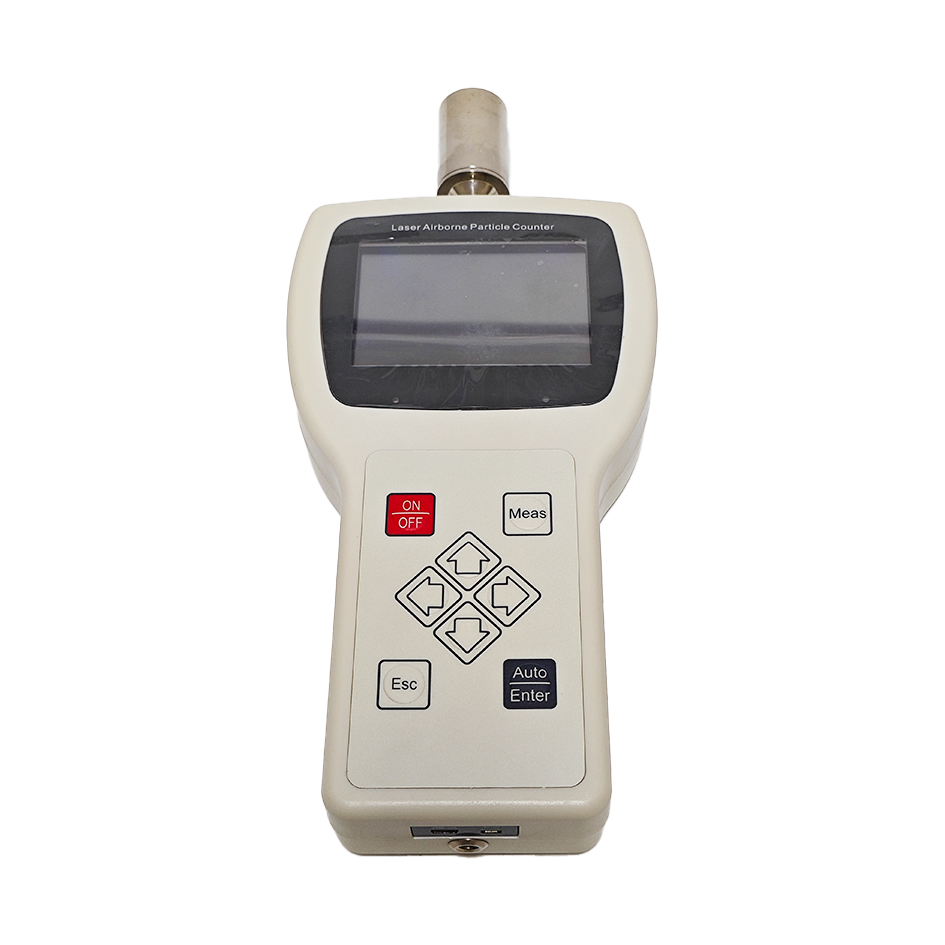
Common capabilities across Zetron's particle counter range
- Submicron particle detection technology, which Zetron describes as enabling high-precision domestic substitution.
- Coverage of both air and liquid contamination, so one supplier can support a facility that monitors both media.
- Results within 3 seconds, automatic alarm when limits are exceeded, and support for real-time regional monitoring.
- LCD touchscreen, built-in printer and instant output of test reports.
- Alignment with ISO14644, EU GMP and FDA CFR 21 part 11, as stated by Zetron.
- Wireless IoT integration and customizable function adaptation.
- Full-chain OEM/ODM services, from needs diagnosis and solution design through installation, commissioning and maintenance support.
Zetron lists Donaldson Company, Inc. and Samsung Bayer among its clients, and names semiconductor, lithium battery, chemical (pure water and ultrapure water), environmental monitoring, disease control centers, food and drug testing, and biopharmaceutical cleanrooms as application areas.
Comparison Table: Which Particle Counter Type Fits Which Job
| Device type | What it measures | Form and role | Zetron example | Typical application |
|---|---|---|---|---|
| Airborne particle counter | Particles suspended in ambient air, sorted by size channel | Air-sampling counting instrument | B110-Pro; B330 / B550 / B1030 (multi-channel, 0.3–25 μm) | Cleanroom and environmental monitoring |
| Laser airborne particle sensor | Airborne particles, laser-based detection | Fixed, online; 2.83 L/min sampling | R210 Laser Airborne Fixed Online Particle Counter | Continuous monitoring at a fixed point |
| Liquid particle counter | Particles suspended in a liquid sample | Intelligent liquid counting instrument | LPC-7CE Intelligent Liquid Particle Counter | Pure water, ultrapure water, process liquids |
| Online particle sensor | Continuous particle data as configured at the point of installation | Fixed unit reporting to a monitoring system | R310P; R200 Online Particle Sensors | Real-time regional monitoring, IoT integration |
| Intelligent particle detector | Particle counts with local processing and reporting | Self-contained instrument with display and report output | LPC-16DA Intelligent Particle Detector | Measurement points that need immediate printed results |
| Particle analyzer | Precision air monitoring data | Analysis-oriented instrument | H630 Particle Analyzer | Medical facilities |
Step-by-Step Breakdown: How to Specify a First Particle Counter
The sequence below turns a vague requirement into a specification that suppliers can quote against, and that you can later accept against.
Step 1 — Fix the medium. Air or liquid decides the instrument family before anything else is discussed. Liquid work points to a counter such as the LPC-7CE; air work points to the airborne range.
Step 2 — Decide whether the measurement is fixed or taken at chosen moments. Continuous requirement means an online device, such as the R210 fixed online counter or an R200 / R310P online sensor. Verification, investigation and sample work mean a counting instrument you can direct at a specific point.
Step 3 — Name the standard you must satisfy. Write down whether the data has to support ISO14644 classification, EU GMP expectations, or FDA CFR 21 part 11 record handling — the three references Zetron states its particle counters are designed to meet. The standard drives the reporting requirement, not only the instrument choice.
Step 4 — Pin the measurement attributes you will be held to. Size range and channel count first: the B330 / B550 / B1030 series covers 0.3–25 μm across multiple channels. Sampling rate next: the R210 is specified at 2.83 L/min. These two numbers decide whether your data can be compared with an existing instrument elsewhere in the plant.
Step 5 — Define the data output. Decide whether you need an on-screen reading, a printed report, an alarm contact, or a network feed into a monitoring platform. Zetron's platform supports LCD touchscreen operation, built-in printing, automatic limit alarms and wireless IoT integration, but the specific combination must be confirmed per model.
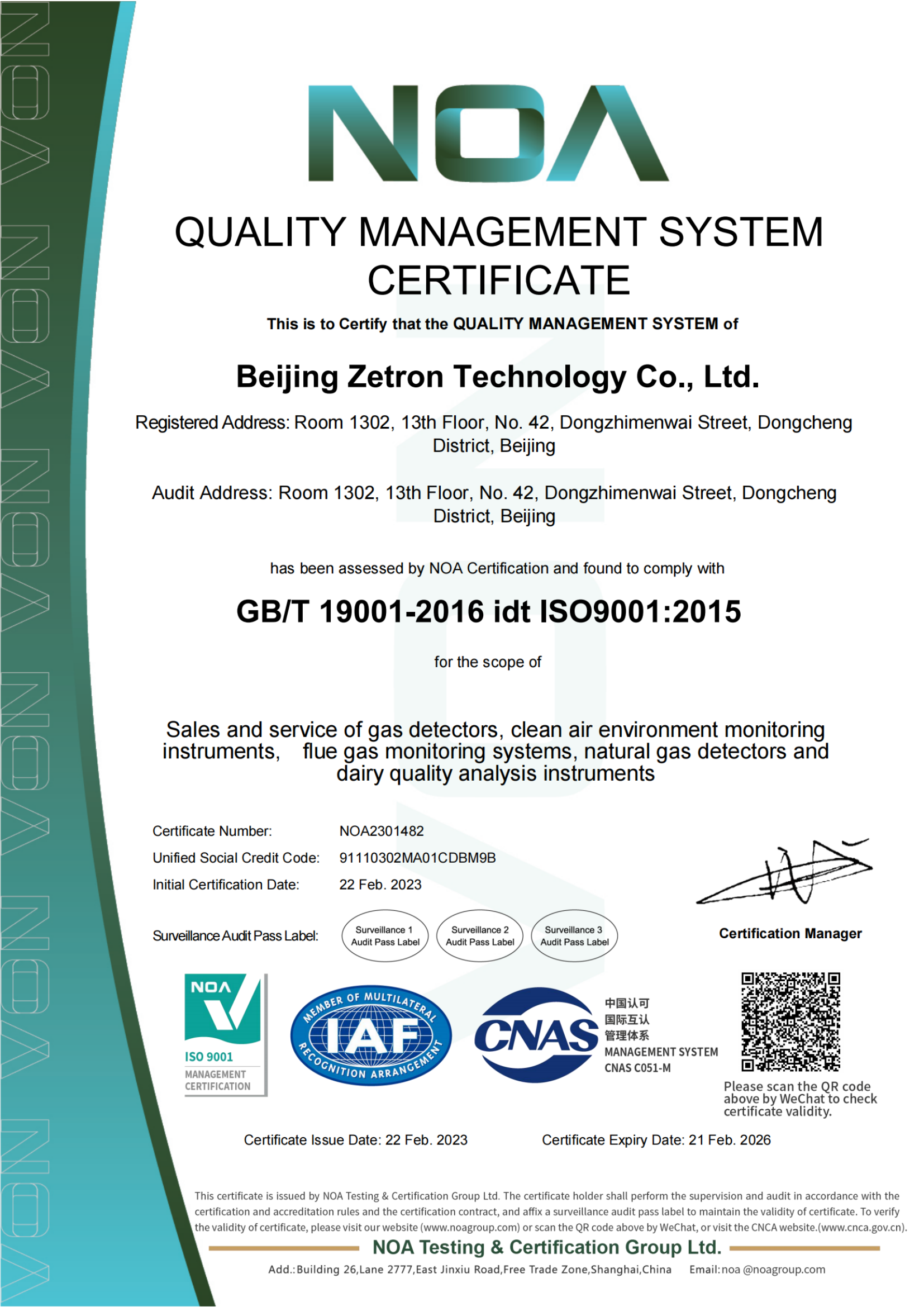
Step 6 — Verify the supplier, not only the datasheet. Production capability, quality system documentation and certification scope matter as much as the specification sheet. Zetron operates multiple professional production lines and holds ISO9001:2005 quality management system certification, SGS testing certification, and CE, RoHS, FCC and ATEX certification.
Step 7 — Agree acceptance criteria before the purchase order. The checklist further below is written to be attached to the PO rather than discussed after delivery.
Use Cases: Where These Devices Actually Sit
- Biopharmaceutical cleanrooms. Airborne counting for classification and routine environmental monitoring, with the data retained for audit. This is where the ISO14644 / EU GMP / CFR 21 part 11 alignment matters most.
- Semiconductor manufacturing. Liquid counting of process chemistry and water, where particulate load affects yield, supported by airborne monitoring in the surrounding environment.
- Lithium battery production. Particulate control in dry and coating environments, where continuous sensing is often preferred over periodic checks.
- Chemical industry — pure water and ultrapure water. Liquid particle counting as a routine quality indicator on a water loop.
- Environmental monitoring and disease control centers. Airborne counting and air quality monitoring as part of wider environmental surveillance.
- Food and drug testing. Documented particulate measurement supporting release decisions and investigations.
- Medical facilities. Precision air monitoring where readings inform clinical and technical judgments, as in Zetron's H630 positioning.
Purchasing Terms and Acceptance Criteria to Verify Before You Order
A beginner's purchase usually fails at the commercial stage rather than the technical stage. These are the terms worth writing into the RFQ:
- Medium and installation mode — stated explicitly, including where the device will be mounted.
- Size range, channel count and sampling rate — the three attributes that make results comparable between instruments.
- Standard alignment in writing — which cleanliness or records standard the model is claimed to support, and how that claim is documented.
- Output and integration — printed report, alarm behaviour, and whether IoT or platform integration is included in the purchased scope.
- Customization scope — Zetron offers full-chain OEM/ODM services covering needs diagnosis, solution design, installation, commissioning and maintenance support; the boundary of that scope should be defined per project.
- Certification scope per model — the certificate set should be matched to the exact model ordered, not to the supplier in general.
On acceptance, run the checks in this order:
- Confirm the delivered model and configuration match the purchase order, including any customized function adaptation.
- Take repeated measurements under your own procedure and confirm the readings are stable and in the expected range.
- Trigger the alarm at the configured limit and confirm escalation behaves as specified.
- Generate a test report on the device and confirm the output format is usable for your records.
- Verify that commissioning, integration and operator familiarization are completed where they fall inside the OEM/ODM scope.
- Collect the certificate copies and confirm they correspond to the delivered model.
FAQ: First-Buyer Questions on Particle Counters
1. Which standards and certifications should a particle counter meet?
For regulated environments, the usual references are ISO14644 for cleanroom classification, EU GMP for pharmaceutical manufacturing and FDA CFR 21 part 11 for electronic records — the three that Zetron states its particle counters are designed to meet. On the supplier side, look for a documented quality system and product certification: Zetron holds ISO9001:2005 quality management system certification and SGS testing certification, together with CE, RoHS, FCC and ATEX certification for its devices. Confirm which certificates apply to the specific model you are buying.
2. Can one supplier cover both air and liquid particle counting?
Yes, in principle, and Zetron's range is built that way: it covers air and liquid contamination with separate instruments rather than one universal device. Air-side work is served by the B110-Pro and the B330 / B550 / B1030 multi-channel counters, or by fixed online units such as the R210. Liquid-side work is served by the LPC-7CE Intelligent Liquid Particle Counter. The devices differ in construction and application, so the practical benefit of a single supplier is shared documentation, service and OEM/ODM support rather than a shared instrument.
3. What drives the cost of a particle counter?
Price lists for this category are configuration-dependent rather than published, so the useful approach is to understand the cost drivers: the device type, the size range and channel count, the sampling rate, whether the unit is fixed and online or sample-based, the reporting and integration features required, the certification and documentation set, and the depth of any OEM/ODM customization. Zetron's submicron detection capability and its full-chain OEM/ODM scope are the two areas where specification choices most directly change the commercial offer. Request a quotation against a defined specification rather than a category name.
4. Can a buyer evaluate a unit before committing to a larger order?
Evaluation arrangements depend on the configuration and the destination, so they are confirmed case by case. The practical next step is to send the application details — medium, size range, target standard and data requirement — to Zetron at info@bjzetron.com or +86-15699785629, and ask for an evaluation unit, a sample quotation or a configuration review against that specification. That conversation is also the fastest way to confirm which of the six device types actually fits the job.
5. How much lead time should be planned for?
Delivery timing is not published as a standard figure, because it depends on whether the order is a catalogue configuration or a customized project. A customized order runs through Zetron's OEM/ODM chain — needs diagnosis, solution design, installation and commissioning, then maintenance support — so the schedule is set by the scope rather than by the product name alone. Confirm the delivery date, the documentation package and the commissioning responsibilities at the quotation stage, and treat them as part of the acceptance criteria.
Conclusion: Choose the Measurement Job First, the Box Second
A particle counter is a counting and sizing instrument, and the six names in this category describe six different jobs: airborne counting for room classification, laser-based fixed sensing for continuous points, liquid counting for water and process chemistry, online sensors for trend data, intelligent detectors for self-contained reporting, and analyzers for precision monitoring. The specification only becomes meaningful once the medium, the size range, the sampling rate and the standard are written down.
For a first purchase, the safe order of work is: define the measurement job, shortlist the device type, verify the measurement attributes on the datasheet, verify the supplier's production and certification evidence, and attach acceptance criteria to the purchase order. Zetron's particle counter range — spanning airborne, laser airborne, liquid, online, intelligent detector and analyzer types, built on submicron detection and backed by ISO9001:2005, SGS, CE, RoHS, FCC and ATEX documentation — covers that decision space for industrial, laboratory and regulated environments.

Next step: define the job, then request a matched configuration
Send the medium, size range, target standard and data requirement, and Zetron will respond with a matching model recommendation, sample and quotation details.
Beijing Zetron Technology Co., Ltd. — www.zetroncn.com · info@bjzetron.com · +86-15699785629 · 19B, Office Tower, Oriental Ginza, No.48 Dongzhimenwai Street, Dongcheng District, Beijing, China
Have Questions or Need More Details?
Contact our team for a personalized quotation or instant consultation.
Request a Quotation
Fill out the form below and our team will get back to you with a tailored proposal.
WhatsApp Direct Chat
Prefer to chat in real-time? Message us on WhatsApp for instant assistance & quick answers.
- Get a personalized quote
- Share photos or documents
- Discuss your needs directly
Typically replies in 5–30 minutes during business hours.