How to Choose the Right Gas Detector for Your Industrial Application: A Comprehensive Buyer's Guide
Navigating the Maze: Your Essential Guide to Selecting Industrial Gas Detection Equipment
In today's industrial landscape, ensuring workplace safety and environmental compliance is non-negotiable. With regulations tightening globally and a heightened focus on worker health, selecting the right gas detector is a critical decision for facility managers, safety officers, and procurement specialists. The market is flooded with options—from simple carbon monoxide detector units to complex multi gas detector systems—making the choice overwhelming. This guide, backed by the nearly two decades of expertise from Zetron (Beijing Zetron Technology Co., Ltd.), will walk you through the key considerations to make an informed, safe, and cost-effective purchase.
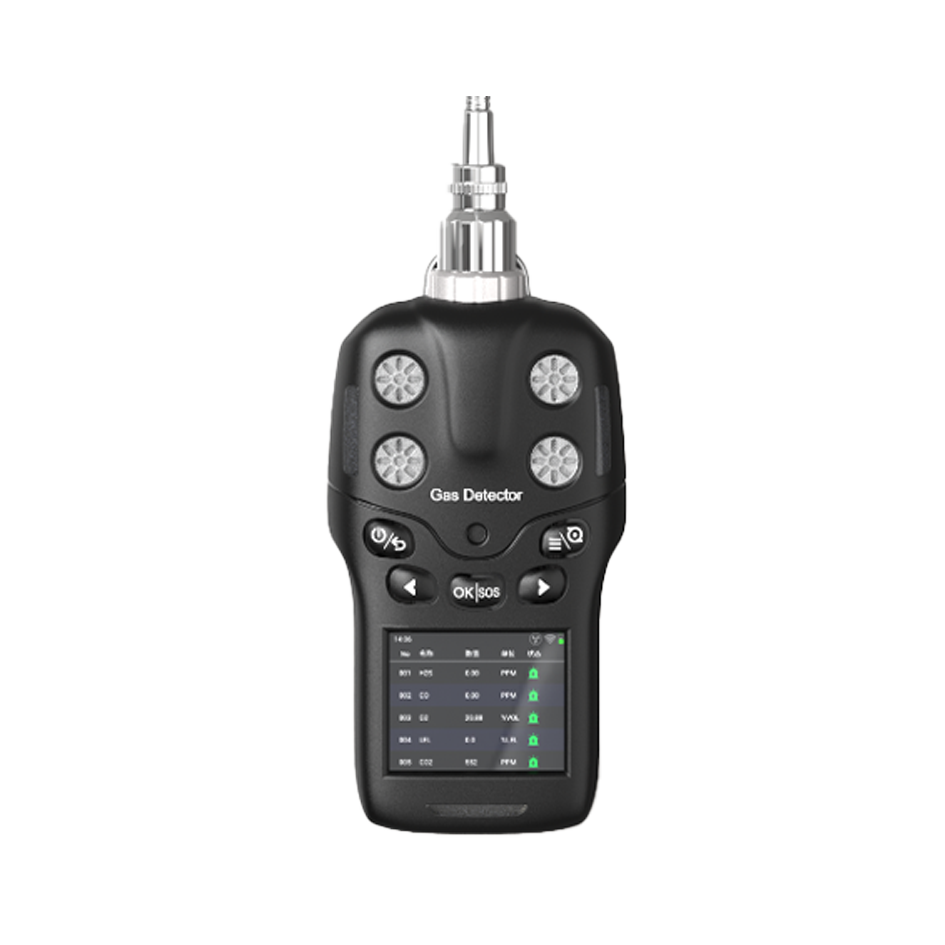
Modern industrial gas detectors, like the Zetron MS400-S series, integrate advanced sensors for comprehensive environmental monitoring.
Step 1: Pre-Purchase Assessment – Know Your Enemy
Before browsing products, you must clearly define the hazards. This foundational step dictates every subsequent choice.
- Identify Target Gases: Is the primary concern a toxic gas detector for substances like H2S or Cl2? Are you monitoring combustible gases (LEL), or do you need an ozone detector or radon gas detector for specific environmental or research applications? For emission control, a flue gas analyzer or VOC gas analyzer might be necessary.
- Understand the Environment: Is the area classified for explosive atmospheres (requiring ATEX certification)? What are the temperature, humidity, and potential interference gases? For outdoor or pipeline monitoring, a remote gas detector like the Zetron MS600-L might be ideal.
- Define the Application: Is this for personal safety (portable gas monitor), fixed area surveillance (fixed gas detector), or process control (online gas detector)? Applications in petrochemical plants differ vastly from those in biopharmaceutical cleanrooms or waste gas treatment facilities.
Step 2: Core Technology & Sensor Selection
The heart of any detector is its sensor. Choosing the wrong type can lead to false alarms or, worse, failure to detect.
- Electrochemical Sensors: Best for toxic gas detector applications (e.g., CO, H2S, SO2). They offer good specificity and sensitivity.
- Catalytic Bead/Pellistor Sensors: The standard for detecting combustible gases in LEL applications. They require oxygen to function.
- Infrared (IR) Sensors: Excellent for environments with low oxygen or where catalytic sensors may be poisoned (e.g., biogas gas analyzer applications). They are also used for CO2.
- Photoionization Detectors (PID): The go-to technology for broad-range VOC gas analyzer needs. A photoionization detector is crucial for measuring volatile organic compounds at low ppm levels.
- Laser-Based Sensors: For long-distance, non-contact detection. Zetron's ZW-G100 Laser Gas Detector and ZW-G200 series are perfect for scanning for gas leak detector points along pipelines or over large areas.

Specialized analyzers, such as the Zetron MIC600S for trace oxygen, are vital for specific industrial processes.
Step 3: Key Product Features & Specifications
Beyond the sensor, these features determine real-world usability and reliability.
- Durability & Protection: Look for a high IP rating. Many industrial-grade detectors, including Zetron's, feature an IP68 protection rating, making them dust-tight and submersible, suitable for harsh conditions.
- Performance Metrics: Check the response time (Zetron aims for <2 seconds for alarms), accuracy (e.g., 1% F.S.), and sensor lifespan.
- Connectivity & Data: Modern gas monitor systems are smart. Ensure the device supports necessary wireless transmission like 4G, NB-IoT, or Wi-Fi for integration into a central gas monitoring cloud platform. Features like real-time location and interconnection between devices can save lives in an emergency.
- Alarm System: A loud, visible gas detector alarm or co detector alarm is essential. Multi-stage alarms (pre-alarm, high alarm) provide earlier warning.
- Power & Portability: For portable gas detector units, battery life is paramount. Fixed systems need reliable power sourcing.
Step 4: Certifications, Compliance & Manufacturer Credibility
This step separates reputable suppliers from the rest. Never compromise on certifications.
A trusted manufacturer like Zetron invests in rigorous testing. Their products hold key international certifications, which you should verify:
- ATEX/IECEx: Mandatory for equipment used in potentially explosive atmospheres.
- CE, FCC: Indicates compliance with European and US health, safety, and environmental standards.
- SIL (Safety Integrity Level): Certifications like SIL2 are crucial for safety instrumented systems.
- Quality Management: ISO9001 certification ensures consistent manufacturing quality. Zetron also holds ISO45001 (Occupational Health & Safety) and ISO240001 (Environmental Management) certifications, reflecting a holistic commitment to safety and sustainability.
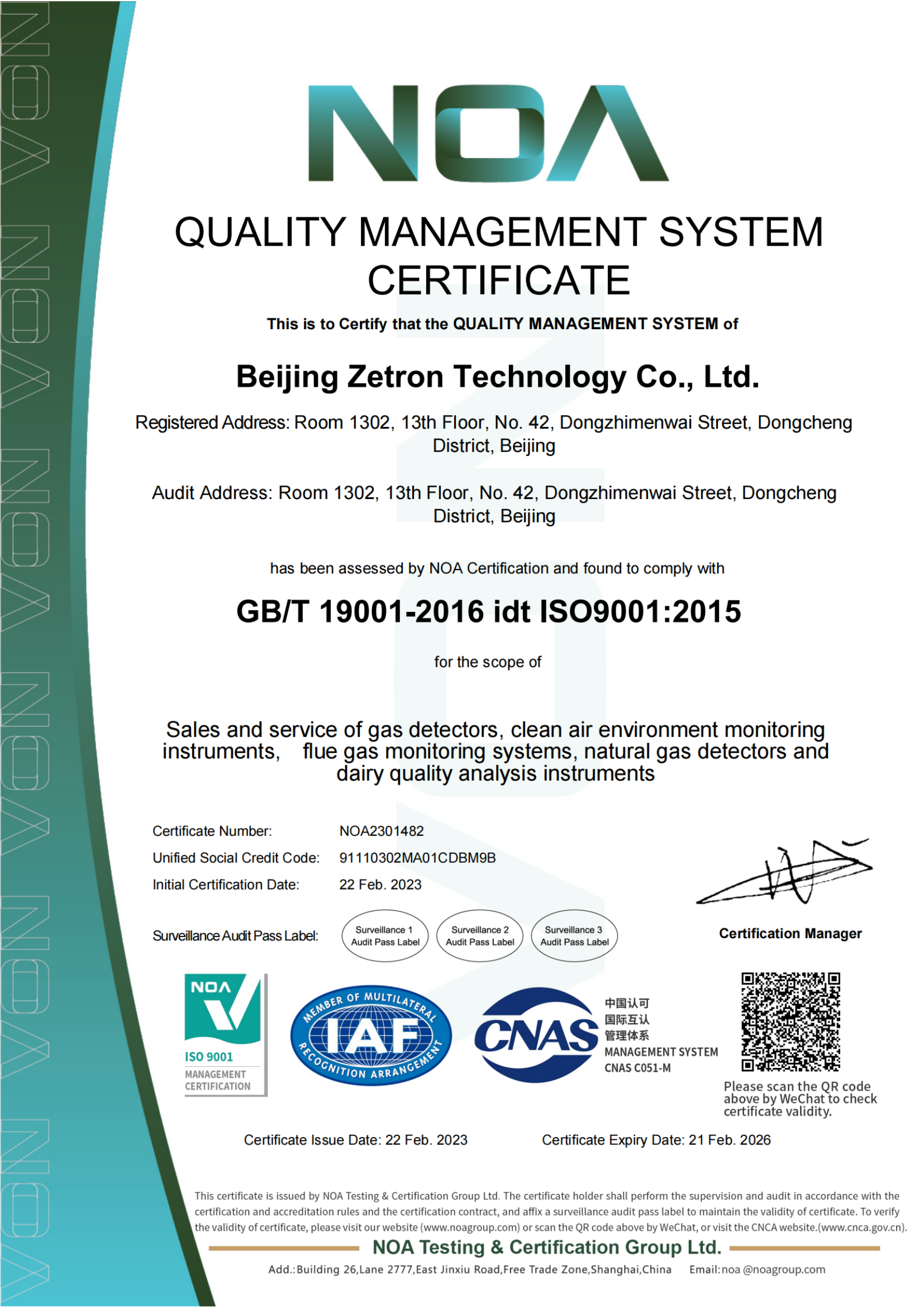
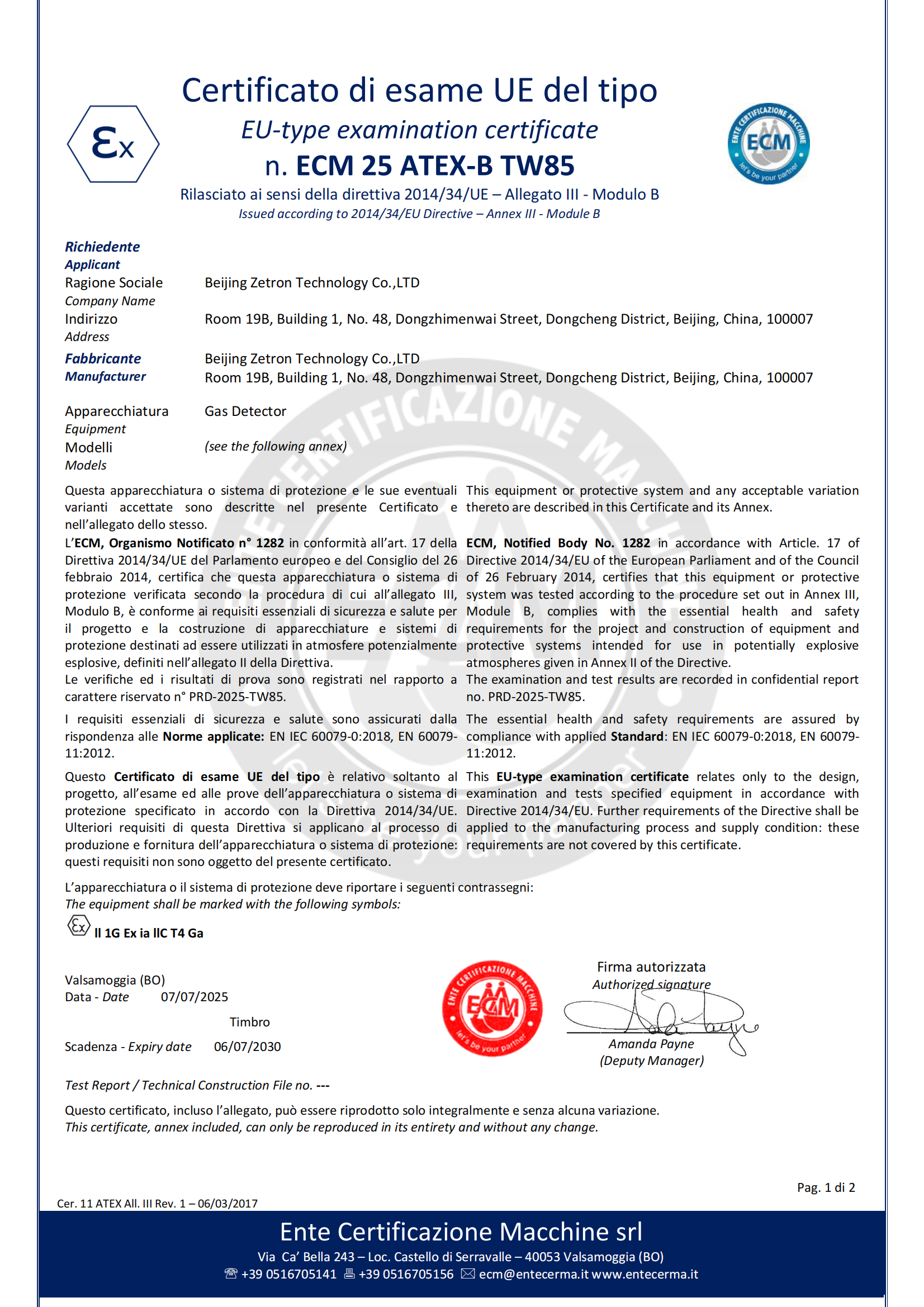
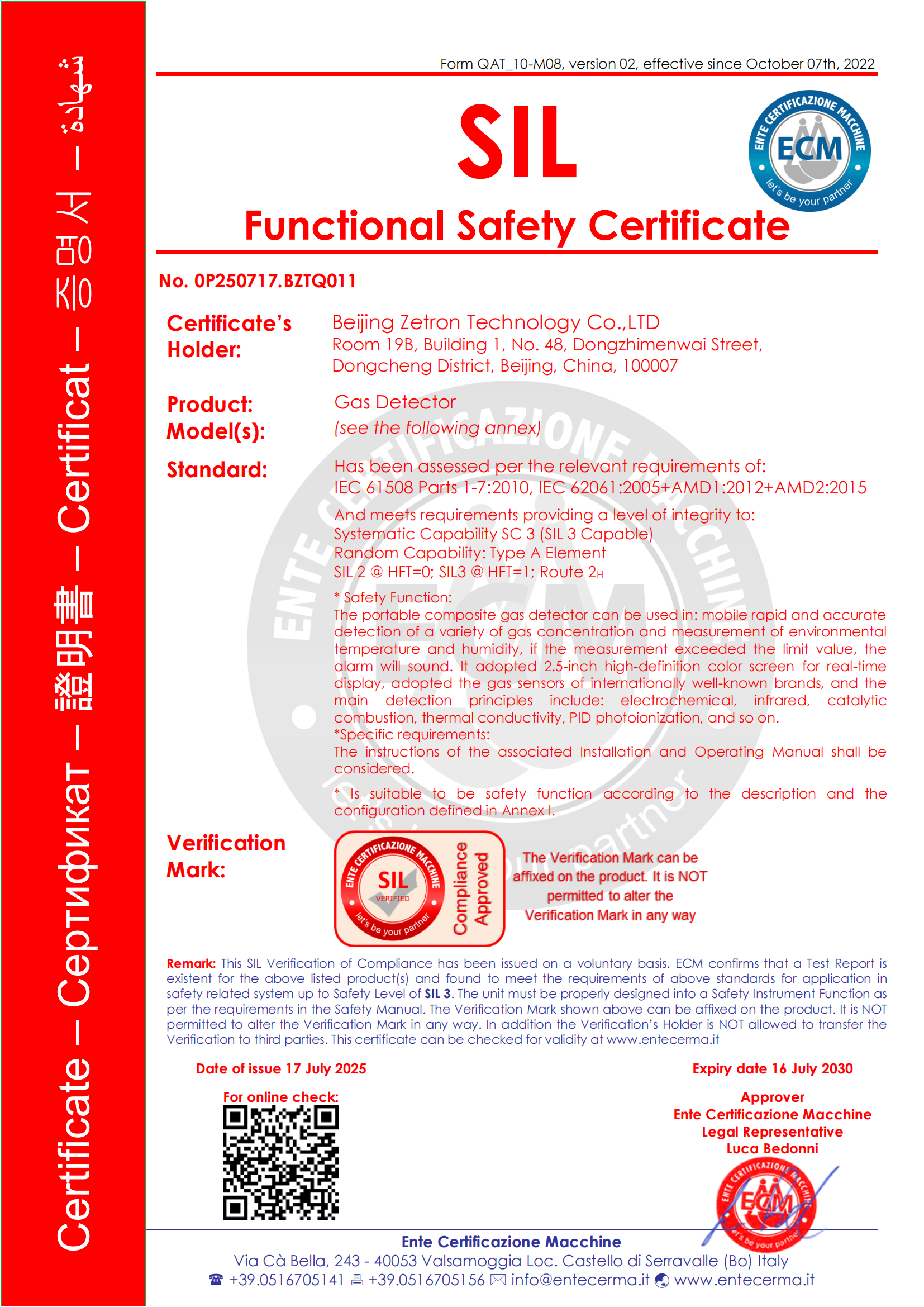
Core certifications like ISO9001, ATEX, and SIL are non-negotiable for reliable safety equipment.
Step 5: Total Cost of Ownership & Support
The purchase price is just the beginning. Consider calibration costs, sensor replacement intervals, and maintenance.
- After-Sales Service: Does the supplier offer calibration services, technical support, and readily available spare parts? Zetron provides full-chain support from diagnosis to maintenance.
- Customization: Off-the-shelf solutions don't always fit. Leading providers offer OEM/ODM customization services to create tailored "one-stop system solutions."
- Scalability: Can the system grow with your needs? Starting with a few portable gas monitors and later integrating them into a fixed online monitoring network should be seamless.
Why Zetron Stands Out as Your Solution Partner
With nearly 20 years of focused expertise, Beijing Zetron Technology Co., Ltd. embodies the principles outlined in this guide. As a "one-stop industrial testing equipment solution provider," Zetron's portfolio spans from personal portable gas detectors to sophisticated fixed gas detector networks, emission gas analyzers, and integrated air quality monitoring systems.
Their products, such as the PTM600-S Portable Air Pollution Monitor for environmental monitoring or the MIC600-Aqi Fixed Online Air Quality Monitoring Station, are designed with the user and the harsh reality of industrial sites in mind. Features like device interconnection, wireless transmission, and robust construction (IP68) address modern safety challenges head-on.
Trusted by global partners including SGS, CEMEX, and NISSAN, Zetron leverages "professional technology to protect the safety of every breath."
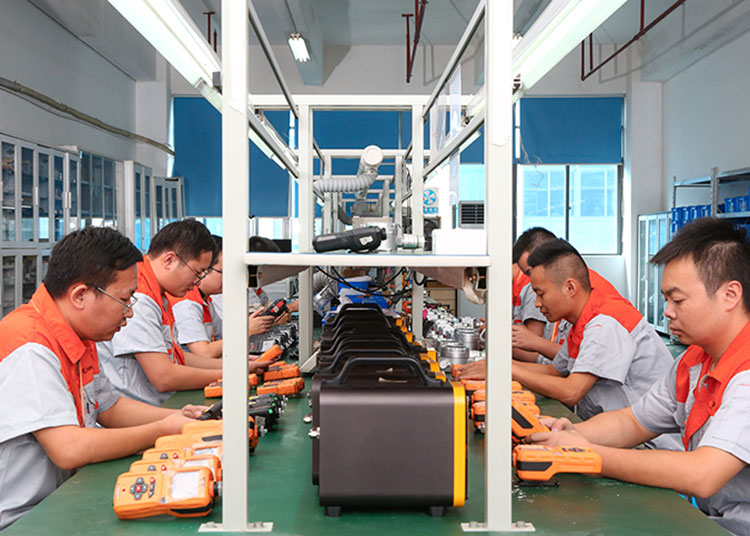
Zetron's dedicated production facilities ensure quality control for every gas detection device manufactured.
Final Checklist Before You Buy:
- ✅ Hazardous gases and concentrations are identified.
- ✅ Appropriate sensor technology is selected.
- ✅ Required certifications (ATEX, SIL, etc.) are confirmed.
- ✅ Device features (IP rating, connectivity, alarms) match the application.
- ✅ Manufacturer offers reliable after-sales support and calibration.
- ✅ The solution fits both your current budget and future scalability needs.
Choosing the right gas detector is an investment in safety, compliance, and operational continuity. By following this structured approach, you can confidently select a system that protects your most valuable assets—your people and your facility.
Ready to find your perfect gas safety solution? Contact the Zetron team for a professional consultation.
Tel: +86-15699785629 | Email: info@bjzetron.com | Website: www.zetroncn.com
Have Questions or Need More Details?
Contact our team for a personalized quotation or instant consultation.
Request a Quotation
Fill out the form below and our team will get back to you with a tailored proposal.
WhatsApp Direct Chat
Prefer to chat in real-time? Message us on WhatsApp for instant assistance & quick answers.
- Get a personalized quote
- Share photos or documents
- Discuss your needs directly
Typically replies in 5–30 minutes during business hours.