
Particle Count Spikes at Shift Change? A Step-by-Step Diagnostic for Online Particle Sensors
A particle count spike that appears within minutes of a shift change is one of the most misread events in cleanroom monitoring. In most cases the sensor is not failing. Something in the room changed — a door held open, a gowning sequence overlapping with a material transfer, a filter loading up, a sample line disturbed during maintenance — and the online particle sensor reported it exactly as designed.
The short answer to “why did my counts spike at shift change?” is that an online sensor reports what happened at its inlet, never why. The cause has to be isolated by working outward from the room, through the sample path, to the instrument, and only then to the data layer. This guide sets that sequence out step by step for cleanroom and process engineers who need to separate an environmental event from a sampling fault from an instrument fault — and to decide when the correct answer is a different instrument entirely.
Problem Definition: Why a Shift-Change Spike Is Ambiguous by Default
Every unexplained excursion has at least three plausible origins, and on a trend chart all three look identical:
- Environmental generation. Particles are genuinely produced or resuspended in the monitored zone.
- Sampling transport error. Particles exist in the room, but the path carrying them to the sensor is leaking, blocked, kinked, damp, or was disturbed during maintenance.
- Instrument or data error. Optics contamination, flow drift, calibration drift, a scheduled self-test, an alarm threshold, a logging interval or a timestamp offset makes the record say something the room never said.
Because the symptom is identical, the default reaction — replace the sensor — is the most expensive step available and the least informative. It also destroys the evidence: a replaced unit cannot be re-tested against the event that triggered it.
Shift change deserves special treatment because it is a genuinely high-probability environmental event. Personnel numbers rise, doors open and close more often, gowning rooms transition, trolleys and transfer containers move, and filters see a step change in loading. The prior should therefore be environment until it is disproved. But a prior is not a diagnosis. One rule cuts through most of the ambiguity quickly: if the spike recurs at the same clock minute regardless of who is on shift — including shifts with a different roster and a different transfer schedule — the cause is more likely to sit in the control, logging or scheduling layer than in the room.
Industry Background: Why Continuous Monitoring Raises This Question
Cleanroom and process monitoring has moved steadily from periodic manual sampling to continuous fixed-point monitoring. A technician with a portable counter samples a point once per shift; an online particle sensor samples the same point continuously and produces a timestamped series with alarms. The trade is clear. Continuous data catches events that periodic sampling misses, but it also surfaces events that nobody was previously asked to explain.
Regulated users feel this most sharply. In ISO 14644 classified areas and EU GMP cleanrooms, the monitoring record is not a convenience — it supports trend review and batch decisions, so an unexplained excursion becomes a deviation that must be investigated and closed rather than simply re-measured. The same holds in semiconductor fabrication, lithium battery dry rooms, pure water and ultrapure water systems, food and drug testing laboratories, disease control centres and biopharmaceutical cleanrooms, where a count excursion can put product on hold.
Beijing Zetron Technology Co., Ltd., which sells under the brand Zetron, is a Beijing-based manufacturer of gas and air detection equipment that has worked in the gas and air detection field for nearly 20 years. Its portfolio covers gas detection equipment, alarms, detectors and analyzers, online monitoring and pretreatment systems, miniature air monitoring stations, odor online monitoring systems, remote laser methane gas detectors, particle counters and air quality monitoring systems, and environmental safety monitoring gas monitoring cloud platforms. For this diagnostic, the relevant part of that portfolio is the particle instrumentation line — online particle sensors, laser airborne particle counters, multi-channel airborne counters, portable counters, liquid particle counters and particle analyzers — because the first question in any investigation is whether the right instrument type was installed at all.
Detailed Solution: One Sequence, Six Checks, Fixed Order
The diagnostic works because it is ordered by cost and by reversibility. Each check is cheaper than the one after it, and each eliminates a whole class of cause. Change one variable at a time, record what you changed, and stop as soon as the cause is identified rather than continuing through the list.
- Confirm the sensor is physically where the monitoring plan says it is.
- Pressure-test the sample path for leaks, kinks, blockages and disturbance.
- Reproduce the event independently with a handheld airborne particle counter.
- Review room differential pressure and the shift-change traffic pattern across the spike window.
- Confirm the intelligent particle detector is logging, timestamping and alarming as configured.
- Assign the cause and escalate to the correct instrument — including to a liquid particle counter if the suspect line carries fluid.
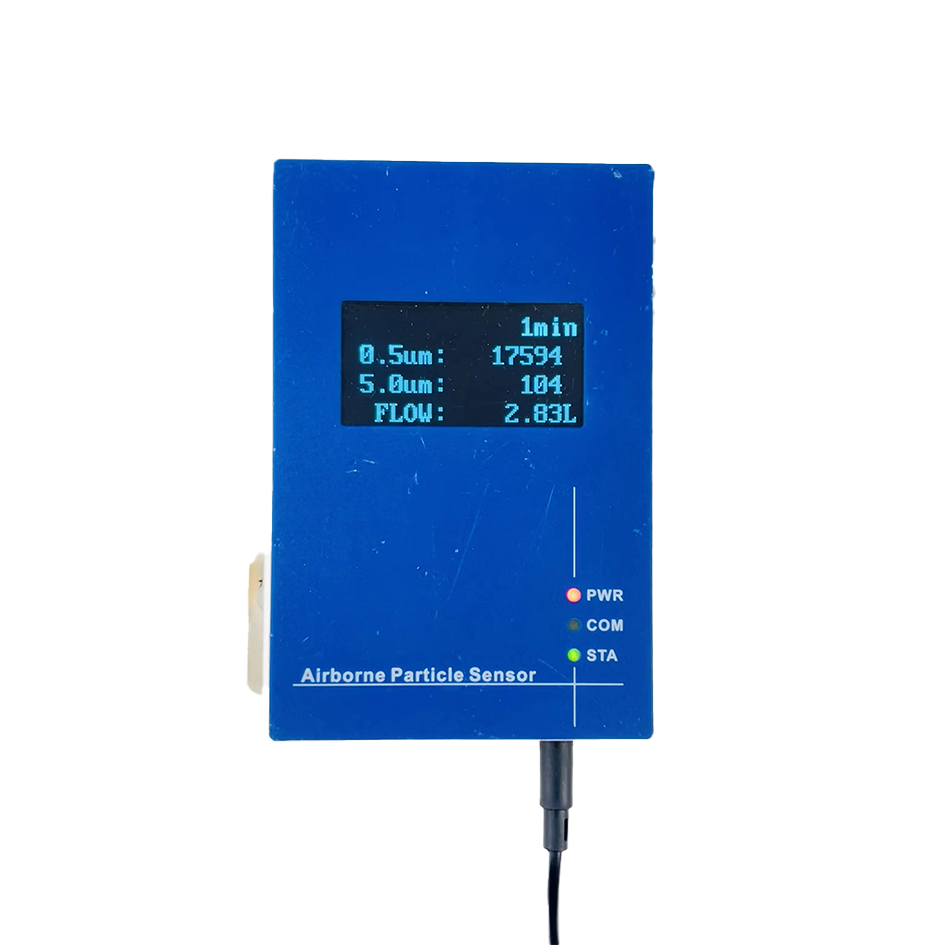
R210 laser airborne 2.83 L/min fixed online particle counter — a fixed-point unit whose placement and sample path determine whether its data can be trusted during a shift-change excursion.
Step-by-Step Breakdown
Step 1 — Confirm the sensor is where the monitoring plan says it is
What you are testing: whether the measurement point still represents the critical zone.
Walk to the sensor and photograph it in place, including its relationship to the nearest air outlet, door, return grille and piece of equipment. Fixed sensors get moved during maintenance, dislodged by a trolley, or boxed in by a new shelf, curtain or partition. A probe sampling the working zone in March may be sampling a dead corner by November.
Check three things. First, height and orientation: the inlet should sit where the monitoring plan places it, facing as specified rather than rotated against the airflow. Second, obstruction: nothing should sit directly in front of the inlet, and the probe should not have been repositioned into the disturbed downflow of a fan filter unit in a way the plan did not intend. Third, local sources: a newly installed printer, a compressed-air outlet, a packaging station or a parked trolley under the probe will all register as a step change that looks like a room trend.
Reading the result: if the sensor has moved or is obstructed, correct it and re-baseline before investigating anything else. If it is exactly where the plan says, move to Step 2.
Step 2 — Pressure-test the sample path before you touch the electronics
What you are testing: whether the particles reaching the sensor are the particles in the room.
The sample path is the most common and least investigated fault in fixed installations. Work along it end to end: inlet probe, tubing, fittings and the sensor's own inlet port. Look for kinks, sharp bends, over-long or sagging runs that trap residue, cracked or hardened tubing, loose barb fittings, disconnected lines, and any moisture or particulate residue visible inside the tube. Tubing disturbed during a maintenance window and re-fitted with a partial seal will produce a repeatable, shift-time spike simply because that is when the room is busiest and the pressure differential across the leak is greatest.
Then run a leak check with the inlet capped or blanked. If the reported count falls to the expected near-zero baseline, the path and the sensor inlet are sound. If counts persist with the inlet sealed, the leak is downstream of the cap or the optical chamber itself is contaminated — and no amount of room-side investigation will resolve either.
Reading the result: a leak, a kink or a contaminant in the line explains a repeatable spike. Correct the path, purge, and re-baseline before moving on. Do not re-fit the same tubing and assume the problem is solved.
Step 3 — Reproduce the event with a handheld airborne particle counter
What you are testing: whether the particles are real, and whether they are in the room or only in the sensor.
This is the decisive cross-check, and it has to be done properly. Use a calibrated handheld particle counter or portable particle counter, and sample at the fixed probe's inlet, immediately beside it, at the doorway, and at the return or exhaust, over the same time window as the spike. Keep the sample duration and the sampling height identical at each point so the comparison is like-for-like. Run it across a full shift change, not a quiet period — the event you are chasing only exists during the transition.
Interpretation is straightforward:
- The handheld sees the same spike at the same time. The particles are real and in the room. Go to Step 4.
- The handheld is flat while the fixed sensor spikes. The particles are not in the room at that concentration. The cause is in the sample path or the instrument. Return to Step 2 with the handheld as your reference.
- Both spike, but by clearly different magnitudes. Expect transport losses, a partially blocked line, or a calibration difference between the two instruments. Document both readings before changing anything.
Reading the result: this step converts an ambiguous trend into a directional finding. It is also the step most often skipped, because the fixed sensor's own history feels more authoritative than a manual sample. It is not.

B110-Pro airborne particle counter — a portable instrument for the independent cross-check in Step 3, sampling the same point and time window as the fixed sensor.
Step 4 — Review room differential pressure and the shift-change traffic pattern
What you are testing: whether the room lost containment at the moment the count rose.
Pull the differential pressure record for the same window and compare it with the count series. A pressure dip that precedes the count rise, even slightly, points to a door held open, a pass-through interlock overridden, a transfer performed outside procedure, or an air-handling transition. A pressure trace that stays flat while counts rise points away from containment and towards generation inside the zone.
Then map the spike against the shift roster and the door or access logs. Gowning, tool handover, waste removal, filter or consumable change, cleaning and material transfer into the zone typically cluster at shift boundaries. If the spike tracks the door-open events rather than the clock, the cause is environmental and the corrective action is procedural or HVAC-side, not instrumental. Also check whether the event coincides with an air handling unit or fan filter unit switching, a damper change, or a scheduled building automation action — these produce room-wide effects that no single sensor can distinguish from a local source.
Reading the result: pressure and traffic correlation tells you whether the room generated the particles. It does not tell you whether the sensor measured them correctly, so keep the handheld data from Step 3 beside the pressure trace.
Step 5 — Confirm the intelligent particle detector is logging what you think it is logging
What you are testing: whether the record itself is accurate.
An online particle counter's value depends entirely on its data layer. Work through it explicitly:
- Timestamp source and drift. Compare the sensor clock with the building management system and the room's own records. A sensor running minutes behind will “spike” at shift change in the log while the room was quiet.
- Logging interval and averaging. A one-minute logged average will not show a ten-second event, and a raw instant count will show events the trend view hides. Export the raw event log, not the smoothed chart.
- Alarm configuration. Confirm thresholds, delay and hysteresis settings, and whether the alarm is latching. A threshold set too close to the normal band will fire on ordinary variation.
- Scheduled activity. Check whether a zero check, self-test, auto-purge or calibration routine runs at the same time each day. Scheduled routines are the classic source of a spike that repeats to the minute.
- Data integrity. Where FDA CFR 21 Part 11 or EU GMP data-integrity expectations apply, confirm that audit trail, user access and record retention behave as intended, and that exported reports match the on-screen record.
Reading the result: if the spike exists only in the log and not in the room, you have found the cause without touching the hardware. If the log faithfully matches an independently observed event, the instrument is doing its job and the investigation belongs in Steps 1 to 4.
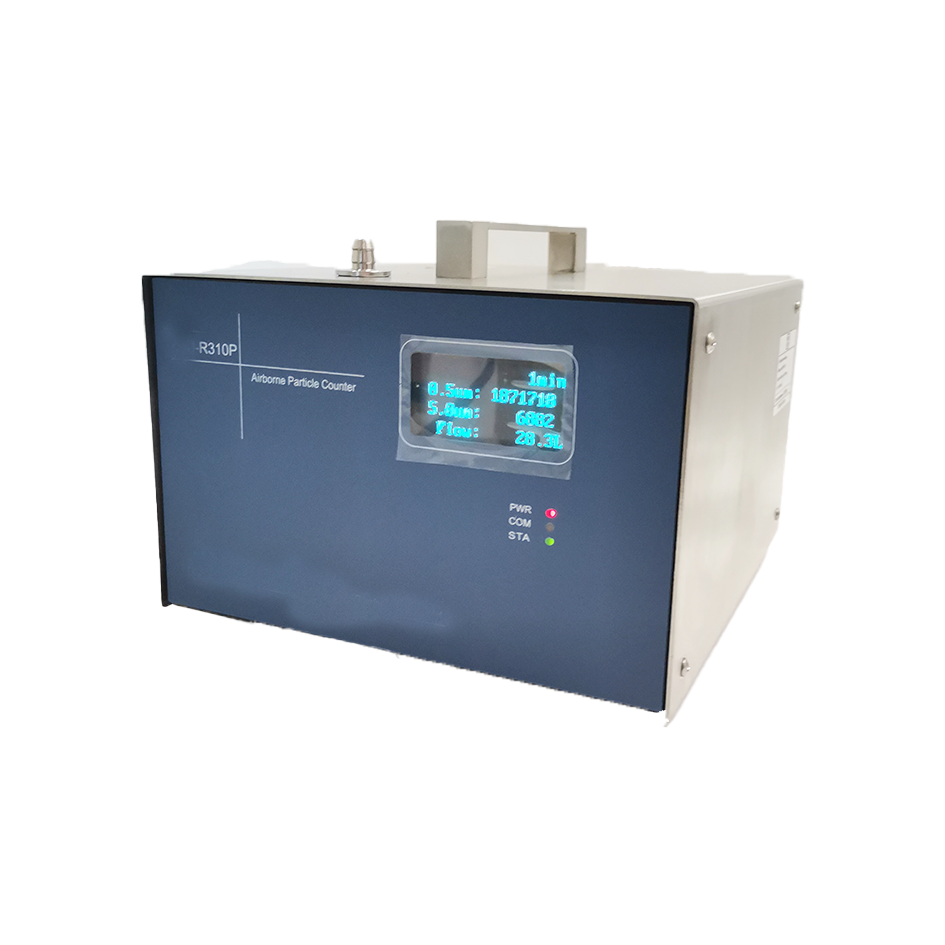
R310P online particle sensors — when an excursion exists only in the log, the logging, timestamp and alarm layer is the fault domain, not the room.
Step 6 — Assign the cause and escalate to the right instrument
What you are testing: whether your conclusion matches the evidence you actually collected.
Before any purchase order or service request, write the finding in one sentence and check it against the data: environment, sampling path, instrument, or data layer. Each has a different owner and a different corrective action, and merging two causes into one work order is how a fix becomes a replacement.
There is one case where the correct action is not a repair at all. If the suspect line carries a fluid — pure water, ultrapure water, a chemical stream, a condensate line — no airborne sensor on that line can give a valid particle count. An air particle counter measures aerosol at its inlet; a fluid line requires a liquid particle counter or a dedicated particle analyzer sampling from the line under the correct pressure and flow conditions. Continuing to diagnose a fluid excursion on an airborne instrument produces confident, wrong answers. That is a specification error rather than a fault, and it is the most expensive kind of diagnostic failure because it repeats every shift.
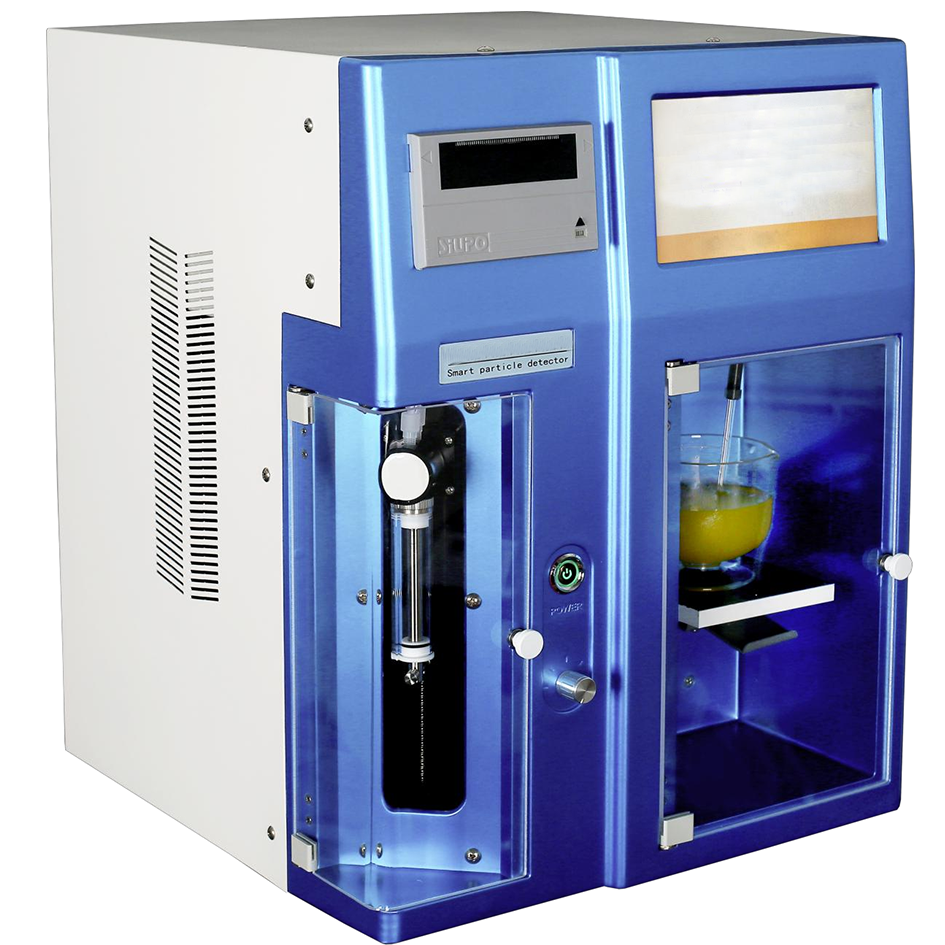
LPC-7CE intelligent liquid particle counter — the correct escalation when the suspect line carries fluid rather than air.
Use Cases: Where This Sequence Pays Back
Semiconductor and lithium battery manufacturing. Continuous fixed-point monitoring around process tools and in dry rooms produces dense time series, and shift-change excursions are frequent because tool handover, transfer and maintenance windows overlap. The handheld cross-check in Step 3 is usually what separates a genuine tool-side generation event from a disturbed sample line.
Biopharmaceutical cleanrooms and EU GMP environments. Here the record carries regulatory weight, so Step 5 matters as much as the measurement itself. Timestamp integrity, alarm configuration and audit-trail behaviour determine whether an excursion can be explained and closed, or whether it becomes an open deviation.
Pure water, ultrapure water and chemical lines. Fluid monitoring belongs to liquid particle counters. A team chasing a “particle spike” on an airborne instrument in a water system should stop and re-specify the instrument before doing anything else.
Environmental monitoring, disease control centres, food and drug testing laboratories. Portable and laboratory particle counters carry the cross-check role here, with fixed online sensors providing the continuous baseline around them.
Medical facilities. Precision air monitoring applications use particle analyzer platforms rather than generic counters where the monitoring plan calls for that class of instrument.

Zetron production line — online sensors, portable counters and liquid particle counters are produced across dedicated lines, which is why the escalation question in Step 6 is a specification question as much as a service question.
Instrument Roles Compared
The table below maps instrument classes to their role in this diagnostic. It compares roles, not rankings; the correct instrument is the one that matches the medium and the monitoring plan.
| Instrument class | What it measures | Role in this diagnostic | Zetron examples |
|---|---|---|---|
| Fixed online particle sensor | Continuous airborne particle counts at one fixed point | Raises the alarm; provides the baseline series | R200, R310P |
| Laser airborne fixed online particle counter | Continuous airborne counts at a fixed installation | Confirms whether the point is stable across a full shift cycle | R210 (2.83 L/min) |
| Multi-channel airborne particle counter | Airborne counts across multiple size channels, 0.3–25 μm | Shows whether the event is size-selective or broadband | B330, B550, B1030 |
| Portable / handheld airborne particle counter | Airborne counts at a point the user selects | Independent cross-check of the fixed sensor | B110-Pro |
| Intelligent liquid particle counter | Particle counts in a liquid stream | Correct instrument when the suspect line carries fluid | LPC-7CE |
| Intelligent particle detector | Integrated particle detection unit | Fixed-point detection; confirm the specified medium and mounting with the supplier before assigning a diagnostic role | LPC-16DA |
| Particle analyzer | Precision air monitoring | Where the monitoring plan specifies an analyzer rather than a counter | H630 (medical facilities) |
What to Lock Down at Purchase Time
Most shift-change investigations run longer and cost more than they need to because the purchasing terms never defined what “working” means. Fix that at the contract stage and the diagnostic becomes a short check instead of a deviation file.
Performance terms
- Measurement point definition. State where the inlet sits, at what height, and with what supplied tubing and inlet fitting. The installation is part of the specification.
- Acceptance test at factory and at site. Agree in writing that the unit will be zero-checked, compared against a reference handheld counter at the installed point, and demonstrated on alarm, logging and report output before sign-off.
- Data output format. Specify the export format and the integration path. Zetron's particle counters support wireless IoT integration and customizable function adaptation, so the protocol should be confirmed in writing rather than assumed.
- Reporting and usability. Where a built-in printer, LCD touchscreen and instant report output are part of the requirement, confirm them for the specific model rather than the product family.
Compliance and evidence file
Request the compliance evidence with the quotation, not after delivery. Zetron's particle counter line is specified against ISO 14644, EU GMP and FDA CFR 21 Part 11, and the company holds ISO 9001 quality management system certification and SGS testing certification, together with CE, RoHS, FCC and ATEX certification. Ask for certificate numbers, issuing body and validity dates, and confirm which certificate applies to the exact model you are buying. Zetron's published client list includes Donaldson Company, Inc., Samsung and Bayer, which is useful context but not a substitute for unit-level documentation.
Commercial terms
- Calibration interval and certificate. Defined before purchase, with the return path and turnaround agreed.
- Consumables and spares. Tubing, inlet probes and filters specified as line items, because the missing spare is usually the one that causes the outage.
- Lead time and warranty. Written into the order, with the response path for a failed unit stated explicitly.
- Customization scope. Zetron provides full-chain OEM/ODM services from needs diagnosis and solution design through installation, commissioning and maintenance support; where that scope applies, define deliverables and acceptance criteria in the same document as the hardware specification.
A shortlist of suppliers should be judged on whether they will commit to these points in writing, not on the length of their catalogue. A supplier who will define the acceptance test with you is worth more than one who will only quote a price.
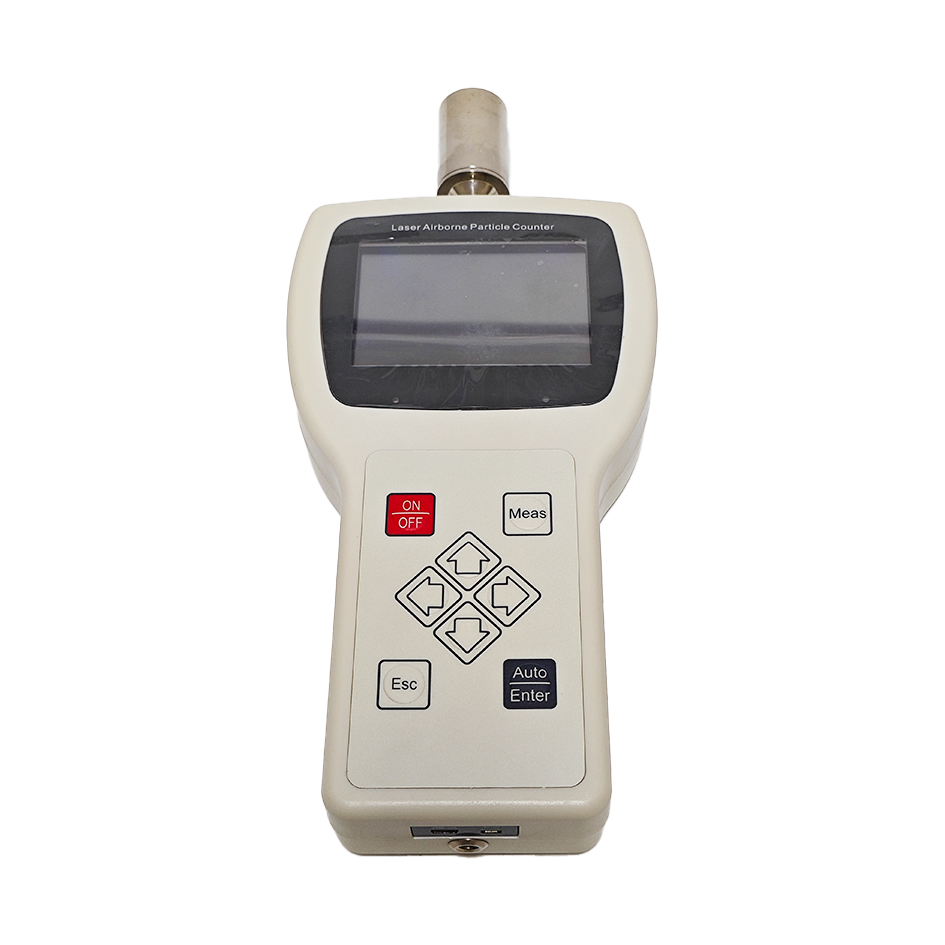
H630 particle analyzer for precision air monitoring in medical facilities — where the monitoring plan specifies an analyzer class instrument, the acceptance test should be written around that specification.
FAQ
Does an online particle sensor need to comply with ISO 14644, EU GMP or FDA CFR 21 Part 11, and what evidence should a buyer request?
Compliance claims should be verifiable at the model level, not only at the company level. Zetron states that its particle counter line is specified against ISO 14644, EU GMP and FDA CFR 21 Part 11, and the company holds ISO 9001 quality management system certification and SGS testing certification alongside CE, RoHS, FCC and ATEX certification. A buyer should request certificate numbers, issuing bodies and validity dates, confirm which certificate applies to the specific model, and — where 21 CFR Part 11 applies — ask for a demonstration of audit trail, access control and report export before acceptance.
Can an online particle sensor tell me whether a spike came from the room, the sample line or the instrument?
No. A fixed online particle sensor reports a count at its inlet; it does not report the origin. The distinction has to be made by sequence: confirm placement, leak-check the sample path, cross-check with a handheld airborne particle counter at the same point and time, correlate against differential pressure and door events, and then verify logging and timestamp behaviour. Each step eliminates a class of cause, and the order matters because the cheap tests come first.
What actually drives the cost of a particle count investigation?
Cost is driven by what gets replaced. Replacing a sensor that was working removes the evidence and leaves the real cause in place, so the event returns. The cheaper path is the sequence itself: tubing replacement, a re-fit, a purge, a calibration check and a handheld cross-check. The largest avoidable cost is an instrument specified for the wrong medium — an airborne counter applied to a fluid line — because that error repeats on every shift until the instrument is re-specified. Defining acceptance criteria and calibration intervals at purchase is what keeps those costs bounded.
Can I trial a particle counter before committing to a full rollout?
Yes — trialling the instrument at your own sampling point is the only reliable way to confirm that the specification matches the room. Zetron supports OEM/ODM engagement and full-chain customization, from needs diagnosis and solution design through installation, commissioning and maintenance support, which makes a site-specific trial practical. To arrange a sample, a quotation or a technical discussion on a specific installation, contact Zetron at www.zetroncn.com, by email at info@bjzetron.com, or by telephone on +86-15699785629.
How long does it take to get a replacement or a re-specified unit?
It depends on the configuration and on whether customization is involved, so lead time should be agreed in writing at quotation stage rather than inferred from a catalogue. For a re-specified instrument — for example, moving from an airborne sensor to a liquid particle counter on a fluid line — the specification, the acceptance test and the lead time should be confirmed together, so the replacement does not arrive without a way to verify it.
Conclusion
A particle count spike at shift change is a diagnosis problem before it is a hardware problem. The room genuinely does generate particles when people, doors and transfers converge on the same window — but so does a leaking sample line, a disturbed probe, a drifted timestamp and a scheduled self-test, and all four look the same on a trend chart.
The sequence is what resolves it: verify placement, pressure-test the sample path, cross-check with a handheld airborne particle counter, correlate against differential pressure and traffic, verify the logging layer, and only then decide whether the instrument is at fault. Where the line carries fluid, the answer is a liquid particle counter rather than a repair. And where the answer is a purchase, define the acceptance test, the compliance evidence and the commercial terms before the order is placed — so the next spike can be closed in an afternoon instead of becoming a deviation file.
Working through an unexplained excursion now? Zetron can review your sensor placement, sample path and data configuration alongside the instrument specification. Request a quotation, a sample or a technical consultation at www.zetroncn.com · info@bjzetron.com · +86-15699785629.
Have Questions or Need More Details?
Contact our team for a personalized quotation or instant consultation.
Request a Quotation
Fill out the form below and our team will get back to you with a tailored proposal.
WhatsApp Direct Chat
Prefer to chat in real-time? Message us on WhatsApp for instant assistance & quick answers.
- Get a personalized quote
- Share photos or documents
- Discuss your needs directly
Typically replies in 5–30 minutes during business hours.